Physikerin der Woche 2025
Starting from January 2018, the German Physical Society's working group on equal opportunities (AKC) has been regularly featuring women in physics who are based in Germany or German women who are working in the field of physics abroad.
If you are a woman working in the field of physics in Germany or a German woman working in physics abroad and would like to showcase your work through the "Physikerin der Woche" initiative, then don't hesitate to get in touch with Dr. Ulrike Boehm at  . This opportunity is open to women in physics at all career stages, whether they are from academia or industry. Moreover, you are also welcome to recommend suitable candidates for the initiative.
You can find an article and posters about our initiative in the April 2018 issue and 2021 / 2022 / 2023 issues of the Physik-Journal. You are welcome to print the posters and promote our initiative at your research institution. To view previous participants from past years, please refer to the following resources: 2018, 2019, 2020, 2021, 2022, 2023 und 2024.
Further interesting information on the topic of career preparation for physicists can also be found on the following DPG pages: Berufsvorbereitendes Programm der DPG and DPG-Berufsvorbereitung online der jDPG
December
Dr. Anna Erzberger (Heidelberg) - Kalenderwoche 52

Photo credits: Joseph Franciosa
Dr. Markéta Kubánková (Erlangen) - Kalenderwoche 51
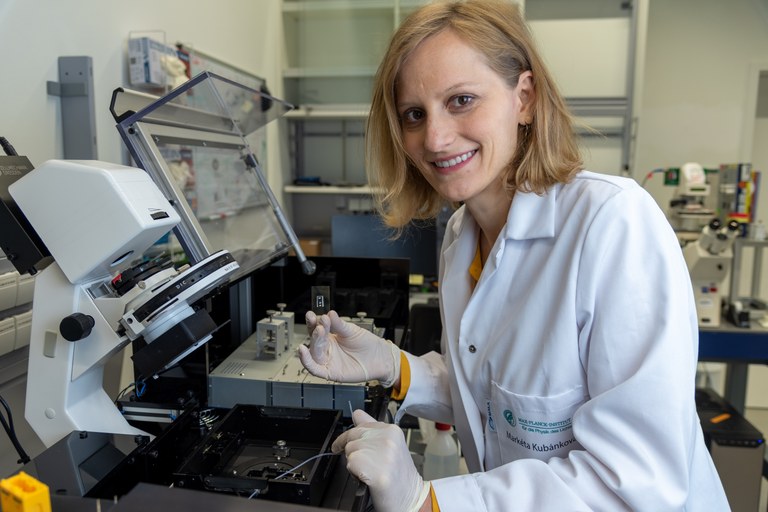
She obtained her PhD in Chemical Physics at Imperial College London, developing fluorescence lifetime imaging with environment-sensitive dyes to probe microscopic viscosity inside living cells. At MPL, she investigates label-free “mechanical fingerprints” of diseases on cells, e.g., what happens to blood cells during COVID-19, or how changes of cell stiffness in biopsies can help detect cancer.
Markéta’s efforts to translate cell mechanics into clinically relevant biomarkers have been recognised with the Hermann Neuhaus Prize of the Max Planck Society and have led to the co-founding of the company Rivercyte GmbH together with her MPL colleagues. Her commitment to science goes beyond the lab: she co-founded and serves on the steering board of the non-profit Czexpats in Science, which connects Czech scientists worldwide and advocates for a stronger, more open research culture in Czechia.
Photo credits: Dr. Markéta Kubánková
Dr. Jaane Seehusen (Oberkochen) - Kalenderwoche 50
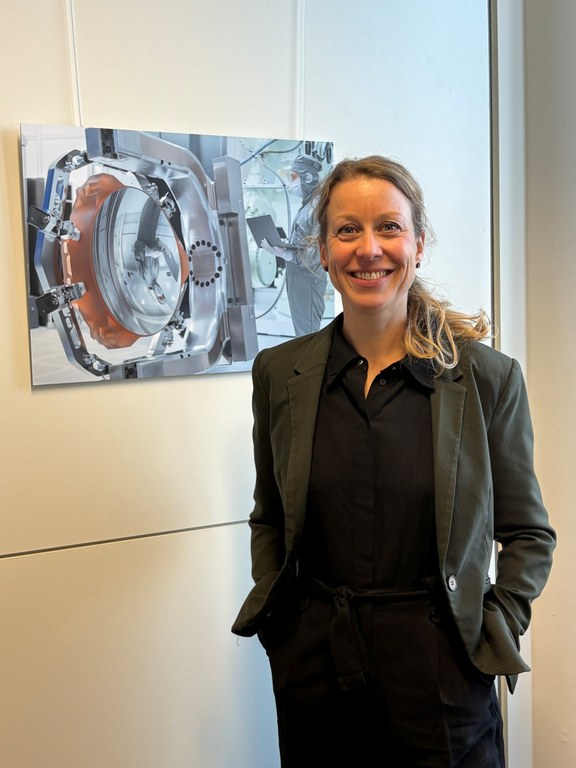
During her PhD in Bonn, where she researched the evolution of hydrogen bonding on a femtosecond timescale, she realized that the creativity and innovative potential of a high-performing team surpass the sum of individual ideas and solutions. This insight shapes her work at ZEISS SMT and influenced her decision to transition from research to management.
In her current role, Jaane oversees Supply Chain Management, collaborating with approximately 500 employees to manage ZEISS SMT's global supply chain. Her conviction is evident in her approach: high-tech in the semiconductor industry is a team effort. The value chain of ZEISS SMT relies on a network of national and international suppliers from 35 countries and over 2,000 partners. Close collaboration, transparency, and long-term partnerships ensure a robust supply chain and contribute to the success of ZEISS SMT and its customers.
Photo credits: Dr. Jaane Seehusen
Dr. Anshika Bansal (Siegen) - Kalenderwoche 49
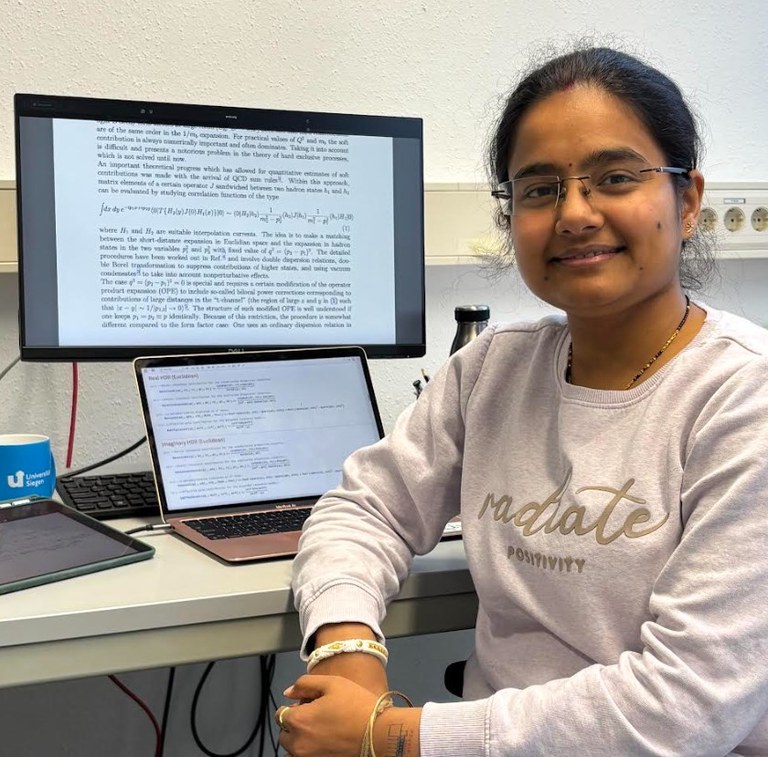
Her research focuses on understanding the dynamics of the strong force, one of nature's fundamental interactions, at low energies using theoretical tools such as Light-Cone Sum Rules and dispersive methods. By improving the precision of form factors and other hadronic inputs, her work helps refine theory predictions in flavour physics and strengthens our ability to identify potential hints of new physics.
Photo credits: Dr. Anshika Bansal
November
Prof. Dr. Rachael M. McDermott (Garching) - Kalenderwoche 48
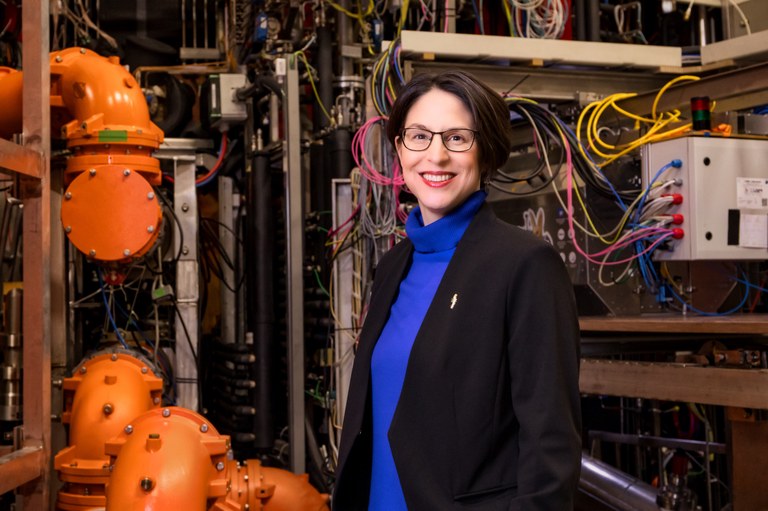
Rachael is a director at the Max Planck Institute for Plasma Physics (IPP), where she heads the Physics of the Plasma Edge division. She leads a team of researchers dedicated to understanding the physics of the plasma edge in tokamak fusion devices. In magnetic confinement fusion, this edge region acts as a critical bridge between the high-performance plasma core, where the fusion energy is produced, and the area where the exhaust is safely managed. In this context, “exhaust” refers to the byproducts of the fusion process: hundreds of MW of power that must be safely managed, as well as helium. By studying the “pedestal” – a narrow zone with steep gradients of temperature and density – they aim to maximize fusion power production while maintaining edge-stability, since sudden collapses here could damage the machine by releasing unwanted heat and particles. The division also investigates how the edge transports impurities (elements other than hydrogen isotopes), particularly ensuring fusion byproducts like helium are expelled while limiting core contamination from reactor walls. The goal is to develop a comprehensive understanding of the plasma edge, enabling the design of scenarios that support stable and efficient fusion energy production for future reactors. To this end, Rachael’s division pursues both experiment and modeling and operates a comprehensive suite of plasma diagnostics to support the edge physics program at the fusion experiment ASDEX Upgrade.
Rachael studied Physics at Saint Louis University, Missouri, and at the Massachusetts Institute of Technology (MIT), where she received her PhD in Plasma Physics and Fusion Technology in 2009. She then accepted a postdoctoral position at the Max Planck Institute for Plasma Physics (IPP) in Garching near Munich. Since January 2025, she has been an honorary professor at the Ludwig Maximilian University of Munich (LMU).
Photo credits: Prof. Dr. Rachael M. McDermott
Dr. Anna Roslawska (Stuttgart) - Kalenderwoche 47
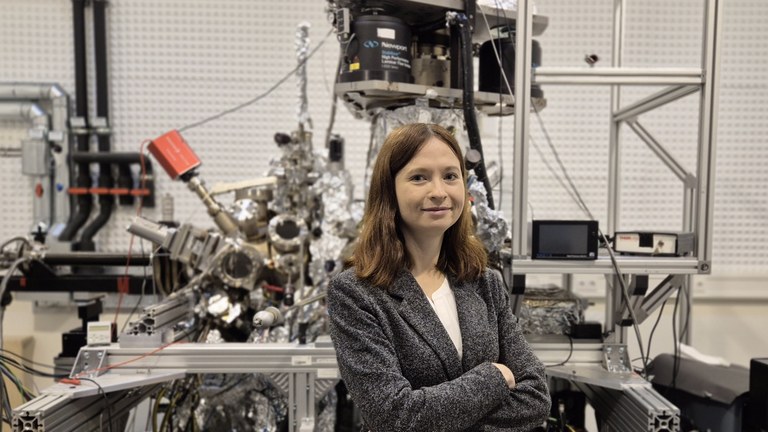
Her research focuses on studying light-matter interaction with sub-nm resolution, achieved through a combination of scanning tunneling microscopy (STM) and optical spectroscopy. Using these techniques, she investigates the fundamental mechanisms underlying processes such as light harvesting, photosynthesis, and electron-to-photon conversion.
Photo credits: Dr. Anna Roslawska
Prof. Dr. Paola Pinilla (London, UK) - Kalenderwoche 46
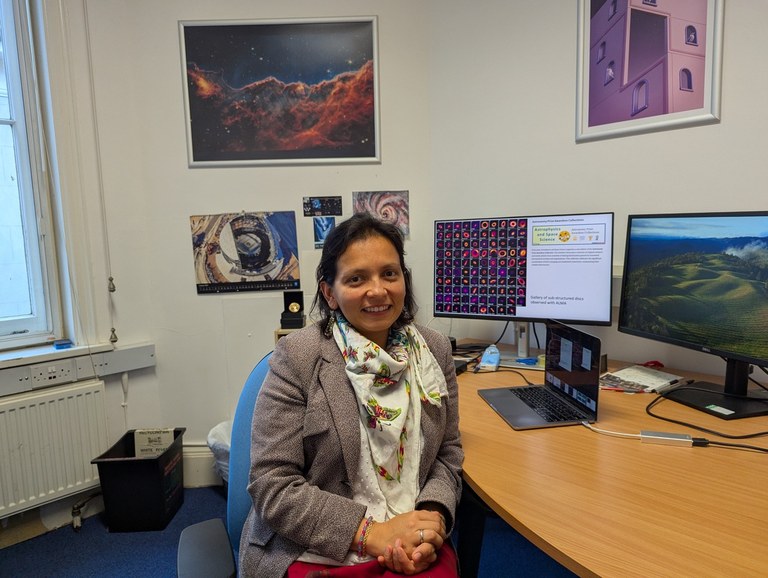
Paola is an Associate Professor at the Mullard Space Science Laboratory, University College London (UCL), in the UK. Since she was little, she has loved looking at the sky. In high school, she and her friends ran an astronomy club where they talked about planets and organized visits to the planetarium in Bogotá, the city where she grew up.
She completed her BSc and MSc in Colombia before moving to Germany for her PhD at Heidelberg University. Before joining UCL, she held several positions, including Postdoctoral Researcher at Leiden Observatory, NASA Hubble Fellow at the University of Arizona, and Independent Group Leader at the Max Planck Institute for Astronomy in Heidelberg.
Her research focuses on understanding the first stages of planet formation through theoretical models and observations of young stars.
Photo credits: Paola Pinilla
Dr. Michelle Küppers (Stanford, CA, USA) - Kalenderwoche 45
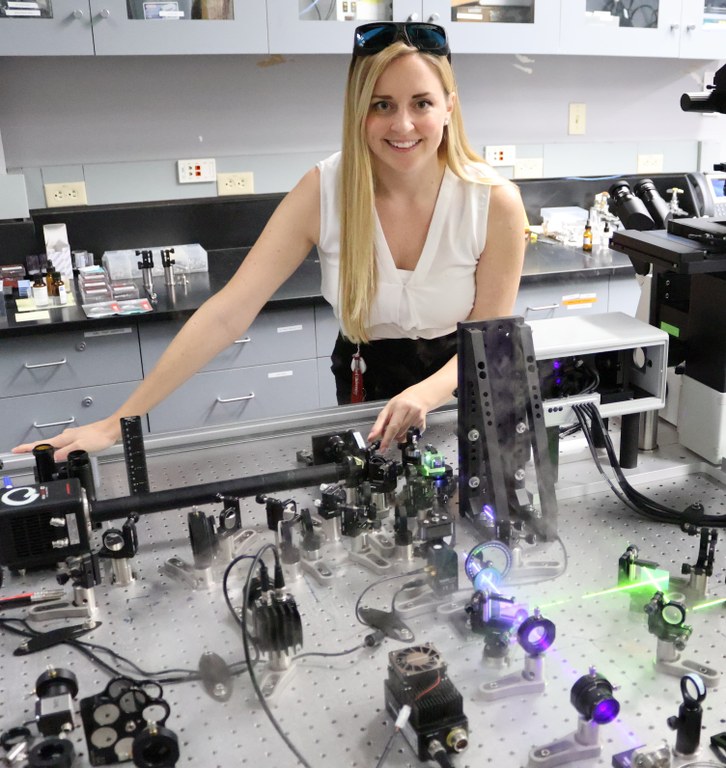
Michelle is a Postdoctoral Researcher at Stanford University (USA), specializing in the field of Nano-Biophotonics and advanced light microscopy. After completing a double degree in physics and mechanical engineering, she pursued her PhD in Physics at the Max Planck Institute for the Science of Light in Erlangen (Germany).
Her research lies at the interface of physics, engineering, and life sciences, with a focus on developing next-generation optical microscopy techniques to investigate nanoscopic matter in its native environment.
During her PhD, she pioneered a confocal implementation of interferometric scattering microscopy (iSCAT) for label-free imaging of weakly scattering nanoscale structures in live cells. Currently, she develops new light microscopy techniques at the nanoscale, integrating interferometric detection with super-resolution fluorescence methods. This interdisciplinary work has broad applications in both life and material sciences and will push the boundaries of spatial resolution and sensitivity in complex systems.
Photo credits: Jennifer Lühr
October
M.Sc. Stefanie Adams (Lansing, MI, USA) - Kalenderwoche 44
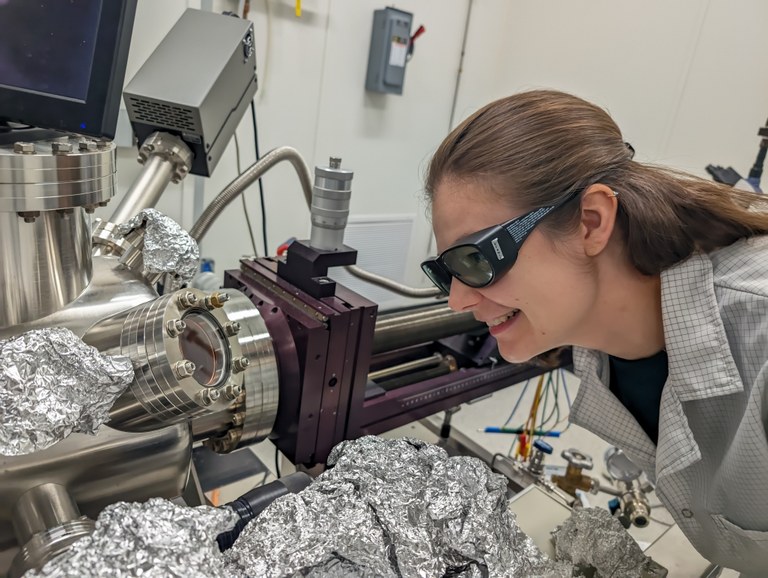
Stefanie is originally from the Stuttgart area in Germany. After completing her bachelor's degree in physics at the University of Stuttgart in 2021, she moved to the USA to pursue her master's and Ph.D., working in Tyler Cocker's group at Michigan State University. Currently, she is writing her dissertation and anticipates defending in February/March 2026. Afterward, she plans to return to Germany for a postdoc position.
In her research, she uses a terahertz scanning tunneling microscope to perform ultrafast spectroscopy and microscopy, aka measurements at very fast and small scales. Her primary focus is on low-dimensional materials, which can exhibit unusual phenomena. The basic idea of the experiment is to excite the sample with a strong, short laser pulse and then probe the material's behavior with ultrafast time resolution using a delayed, weaker terahertz pulse. The key point is that all of this is taking place at the incredibly sharp tip of a scanning tunneling microscope. When this tip scans over the sample atom by atom, they can capture images and stroboscopic movies of the change in charge density on the material's surface with atomic resolution. This type of measurement enables the study of the role of impurities and defects in the crystal lattice, local behavior of phase transitions, or the dynamics of charge density waves. All these phenomena can influence a material's macroscopic behavior, such as its conductance, and investigating them ultimately contributes to making electronic components smaller, faster, and more efficient.
Photo credits: Stefanie Adams
Dr. Rebecca Boll (Schenefeld) - Kalenderwoche 43
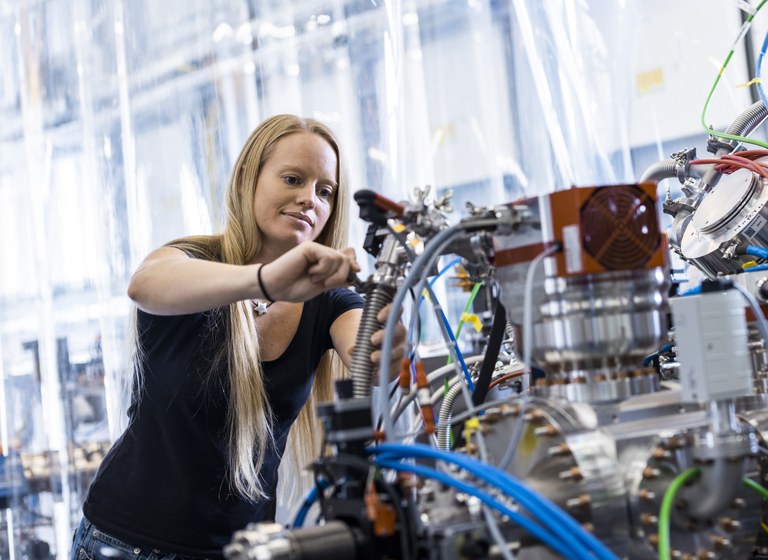
Rebecca is a staff scientist at the European XFEL in Schenefeld near Hamburg, where she works at the SQS scientific instrument. She is mainly responsible for the reaction microscope that enables precise measurements of ions and electrons produced when atoms or molecules interact with the ultra-intense X-ray pulses. The user beamtimes at the free-electron laser involve working with international teams of scientists on a variety of scientific topics—a very collaborative, never-boring job!
Her research focuses on understanding how X-rays interact with atoms and molecules, as well as on observing molecular dynamics following photoexcitation. In recent studies, she has, for example, disentangled several different photoexcitation channels and observed correlated quantum fluctuations in the ground-state structure of complex molecules.
Rebecca collaborates closely with several international research teams for these XFEL experiments. From 2026 onward, she will also serve as a principal investigator in the Cluster of Excellence “Advanced Imaging of Matter” (AIM).
Photo credits: European XFEL / Jan Hosan
Dr. Phila Rembold (Wien) - Kalenderwoche 42
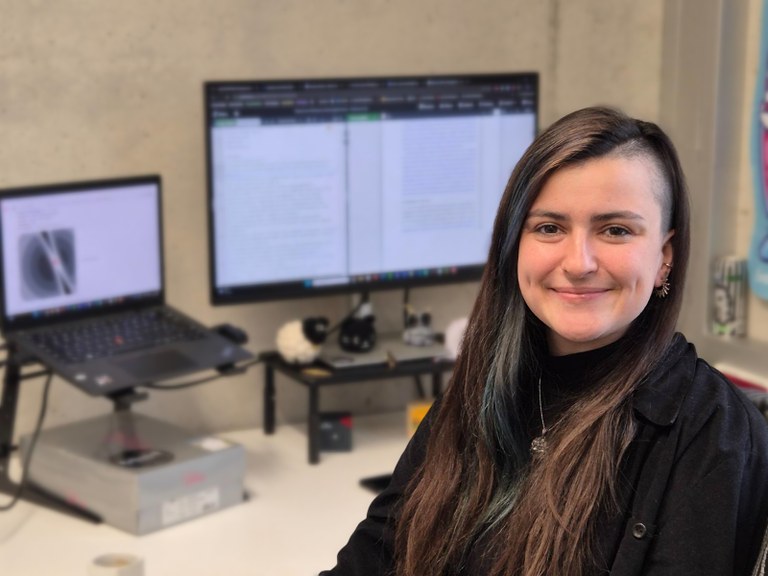
Phila completed her undergraduate studies at the University of St Andrews (UK) and obtained her PhD jointly between the University of Padua (IT) and the University of Cologne (DE). There, she was awarded the Ernst Ising prize for her doctoral thesis in 2022. Since then, she has been conducting her work in Vienna in the group of Nicolai Friis. Recently, she was granted an ESPRIT fellowship by the Austrian Science Fund (FWF) to continue her research. She is furthermore passionate about outreach. If you are interested, you can catch her discussing her work at the Berlin Science Week in November.
Photo credits: Jake Xuereb
M.Sc. Klara Anneliese Spieker (Darmstadt) - Kalenderwoche 41
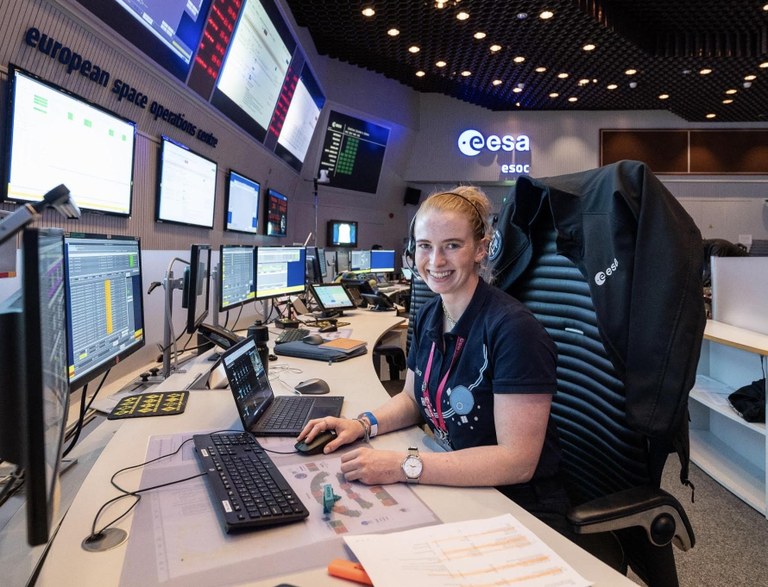
Since 2024, she has been working as a Spacecraft Operations Engineer for ESA’s Hera mission, Europe’s first planetary defense mission. She contributed to the preparation of the spacecraft for launch and was part of the flight control team during the crucial launch and early orbit phase. Hera is now on its journey to the asteroid Dimorphos, where it will perform a detailed post-impact survey following NASA’s DART mission, marking a key milestone in international efforts to test asteroid deflection.
Photo credits: European Space Agency
September
Dr. Anna Kashkanova (Erlangen) - Kalenderwoche 40
Photo credits: Dr. Shuhan Jiang
M.Sc. Newsha Vesalimahmoud (Duisburg) - Kalenderwoche 39
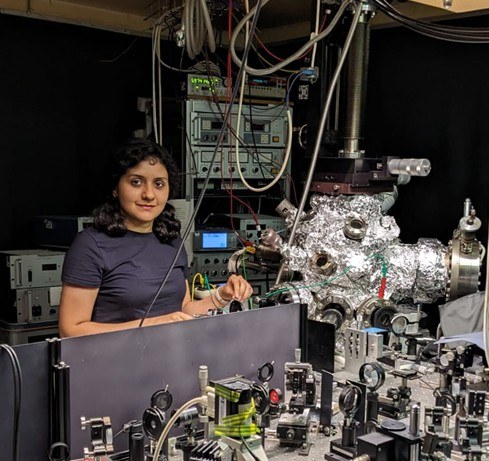
Her research focuses on how molecular adsorption influences electronic and optical properties. As a model system, she uses FeOEP (Iron Octaethylporphyrin) molecules adsorbed on a Cu(001) surface, which is prepared in an ultra-high vacuum (UHV) system. These molecules are ideal for studying ultrafast and surface-specific dynamics, and potentially relevant for future applications in molecular electronics. To probe these interactions with high sensitivity and surface specificity, she employs second harmonic generation (SHG). This nonlinear optical technique enables her to detect changes in symmetry and charge distribution at the interface.
Photo credits: Newsha Vesalimahmoud
Dr. Rossella Falcone (Wessling) - Kalenderwoche 38
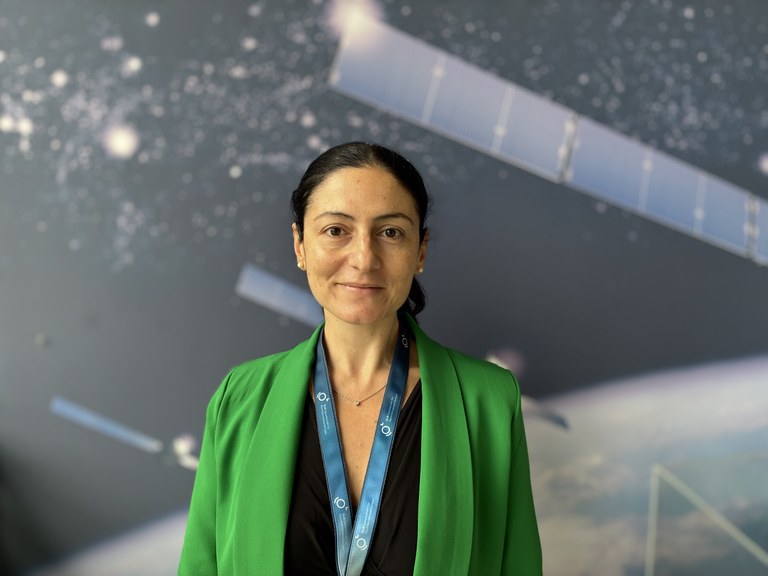
Since April 2025, she has worked at DLR GfR as Technical and Industrial Supply Chain Manager in the maintenance of the ground segment of the European satellite navigation system GALILEO. Among her recent projects are studies on quantum key distribution (QKD) and optical communication for space applications. Her work in this field is widely recognised.
Her career illustrates the wide range of opportunities for physicists to apply their expertise, from academic research to leadership roles in complex technical and industrial environments.
Photo credits: Rossella Falcone
Dr. Sabina Hillebrandt (Cologne) - Kalenderwoche 37

Her research centers on organic optoelectronic devices, particularly organic light-emitting diodes (OLEDs) and their fundamental photophysics. More recently, she has been developing organic electronic devices for biomedical applications, including neuroimplants that function in both the visible and near-infrared range to enable new approaches to neurostimulation and interfacing. This interdisciplinary direction links materials science, device physics, and neuroscience with the goal of advancing minimally invasive bioelectronic technologies.
With her project on developing a bidirectional neuroimplant for near-infrared neuromodulation for neuroprotection in neurodegenerative diseases, she was awarded an ERC Starting Grant this year.
Photo credits: University of Cologne / Ludolf Dahmen
Dr. Maryna Meretska (Karlsruhe) - Kalenderwoche 36

Optical metasurfaces have emerged as a transformative technology, offering unprecedented control over light at the nanoscale. Her lab is pushing the boundaries of this research field by developing and testing novel active and passive metaoptical components. The developed technologies are advancing scientific and commercial applications, including automotive technologies, microscopy, holography, quantum computing, and other fields.
Photo credits: Dr. Maryna Meretska
August
M.Sc. Verena Leopold (Erlangen) - Kalenderwoche 35
Photo credits: Dr. Stefan Richter
Prof. Dr. Sadia Bari (Hamburg & Groningen, NL) - Kalenderwoche 34
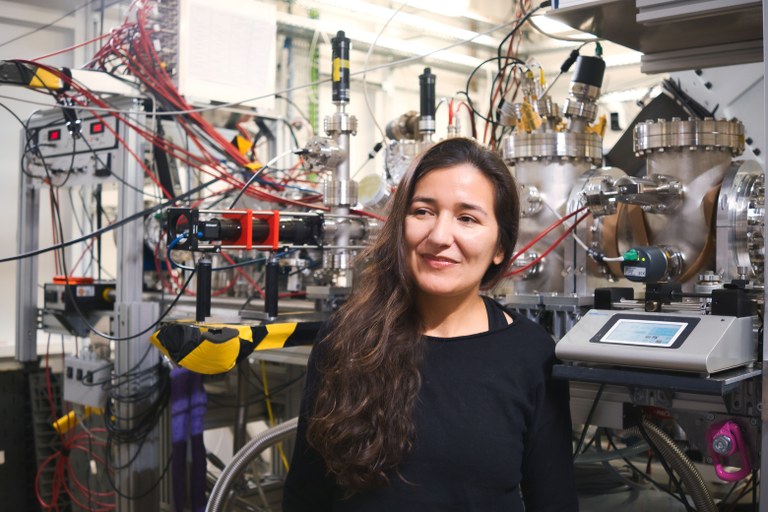
After studying physics and completing a PhD in atomic and molecular physics at the University of Groningen, Sadia returned to Germany for a postdoctoral position within the Max Planck Advanced Study Group at the Center for Free-Electron Laser Science, and has been based in Hamburg ever since. She established her research group at DESY with a Helmholtz Young Investigator Group grant, which was further strengthened by a Helmholtz Association grant for a first professorial appointment.
Since 2021, Sadia has held a professorship at her alma mater, the University of Groningen, with the aim of internationalization and fostering stronger scientific ties between these two dynamic research environments. She is a member of the Cluster of Excellence "Advanced Imaging of Matter" and serves as a pillar speaker for the Centre for Molecular Water Science.
Sadia's group investigates structure–function relationships in biomolecules, focusing on how these are intricately shaped by physical properties and responses to environmental stressors. This research combines tandem mass spectrometry with advanced spectroscopic techniques.
Photo credits: Prof. Dr. Sadia Bari
M.Sc. Carina Kießling, MBA (Frankfurt am Main) - Kalenderwoche 33
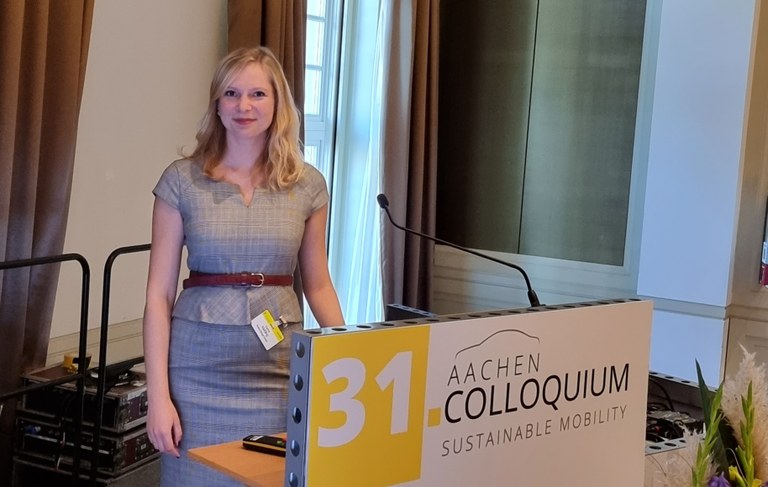
From her research at the German Aerospace Center (DLR), where she focused on active-optical systems, she transitioned into the consulting world to be closer to real-life business applications. Nonetheless, she has remained a passionate physicist and built her close-to-physics business and client circle. Today, Carina is focused on high-tech strategies and with her teams, she supports companies in various challenges, from business model generation, growth-, go-to-market-strategies, transformations, to mergers & acquisitions. Her experience is deeply rooted in the micro-electronics, semiconductors, chemicals, aerospace & defense industries.
As selected examples, she helped a sensing company to bring first products to selected end-markets, set up a quantum expert council advising public institutions and defining a national strategy, or supported a photonics player in the preparation of an IPO.
Assuring and assisting female MINT-talents that they can have a leading place, fulfill their vision of moving the business world, and see their research background as an advantage is an affair of the heart for her.
Photo credits: Carina Kießling
Dr. Pelin Tozman (Darmstadt) - Kalenderwoche 32
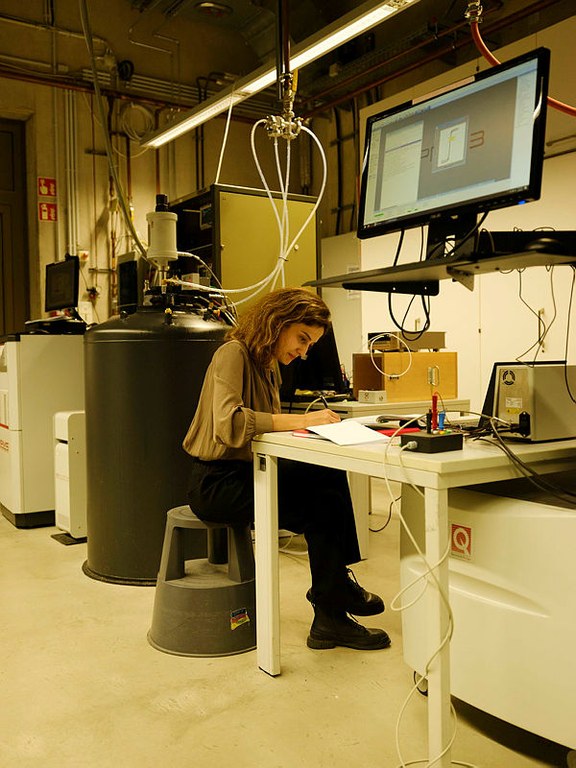
Pelin is an Athene Young Investigator and ERC Starting Grant group leader at the Functional Materials group, Technical University of Darmstadt. Her research centers on designing advanced materials for practical applications, ranging from permanent magnets for green energy, magnetic recording media, and spintronic devices to noise suppression materials for 5G technologies. She has worked with diverse material systems in various forms, including nanocomposites, powders, ingots, thin films, and nanostructures. With her ERC project MAG-TOOL, she and her team are developing an integrated toolbox that combines experimental methods with machine learning to accelerate material discovery, minimize trial-and-error, and enable the design of sustainable, high-performance magnetic materials. Beyond research, she is committed to curriculum innovation in smart materials, AI-driven materials science, and sustainability.
Pelin earned her PhD at Trinity College Dublin, where she contributed to European projects on medium-grade magnets, Heusler alloys, and Mn-Ga phase diagrams. She then worked as an ICYS fellow at the National Institute for Materials Science (NIMS), Japan, focusing on SmFe₁₂-based magnets and magnetic recording media.
Photo credits: Katrin Binner
July
M.Sc. Ronja Pappenberger (Karlsruhe) - Kalenderwoche 31
Photo credits: Markus Breig, KIT
M.Sc. Mira Hesselink (Göttingen) - Kalenderwoche 30
Photo credits: M.Sc. Mira Hesselink
B.Sc. Verena Bellscheidt (Cambridge, MA, USA) - Kalenderwoche 29
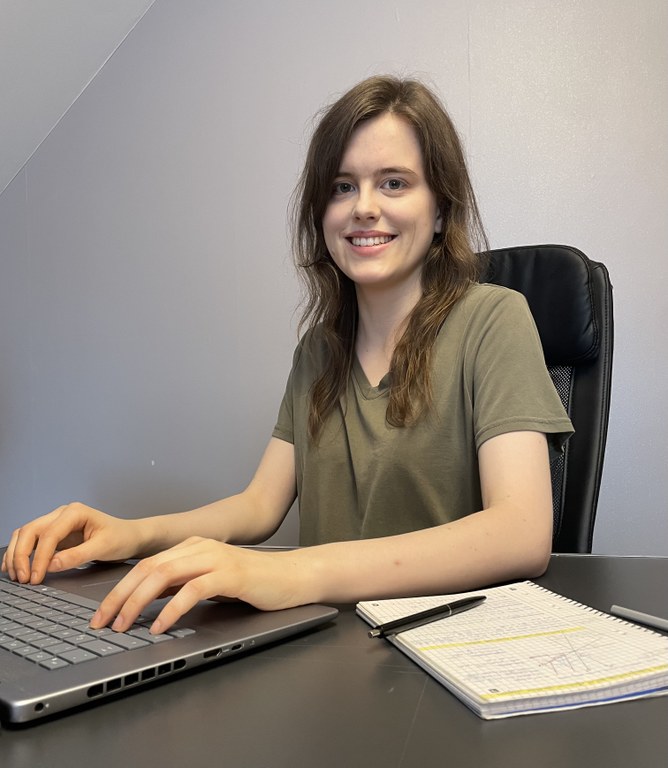
Verena is an incoming doctoral student at MIT in Cambridge, MA, USA.
Her research journey began with an internship at the Max Planck Institute for Astrophysics, where she utilized data from cosmological simulations to investigate the Epoch of Reionization (EoR). The EoR is the epoch of cosmic history where the first stars and galaxies ionized the hydrogen of the intergalactic medium. During and after her internship, she investigated observational constraints that impact our ability to study the so-called galaxy-Lyman-alpha cross-correlation, which is closely related to the EoR, and she eventually co-authored two papers in this research area.
For her bachelor's thesis at the Technical University of Munich, she "zoomed in" from cosmological simulations to lattice QCD, i.e., simulations of the quantum field theory of the strong interaction, where she attempted to optimize the computation of the quark-antiquark potential using a neural network.
In Fall 2025, Verena will continue her research in theoretical particle physics as a doctoral student at MIT.
Photo credits: B.Sc. Verena Bellscheidt
M.Sc. Marie Cassing (Frankfurt) - Kalenderwoche 28
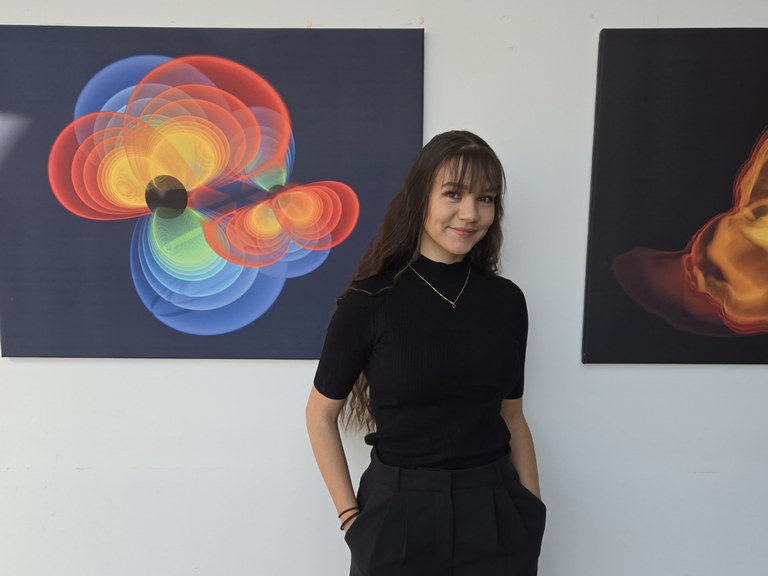
Photo credits: M.Sc. Marie Cassing
June
M.Sc. Mireia Tolosa Simeón (Bochum) - Kalenderwoche 27

Her research focuses on theoretical condensed matter physics, with a particular emphasis on Dirac materials and their dynamics, geometry, and thermal effects across three key topics: analog gravity, hyperbolic-to-Euclidean lattice crossover, and relativistic Mott transitions and quantum criticality. Aspects of her research extend to cold atom physics, gravity, cosmology, quantum field theory, functional renormalization group methods, and hyperbolic lattices, among other areas. She uses Dirac materials as analog models to simulate cosmological phenomena such as particle production during the early universe’s expansion, as well as phenomena from elementary particle physics, including spontaneous chiral symmetry breaking, which induces fermion mass generation.
Photo credits: MSc. Bilal Hawashin
Prof. Dr. Lisa Stinken-Rösner (Bielefeld) - Kalenderwoche 26
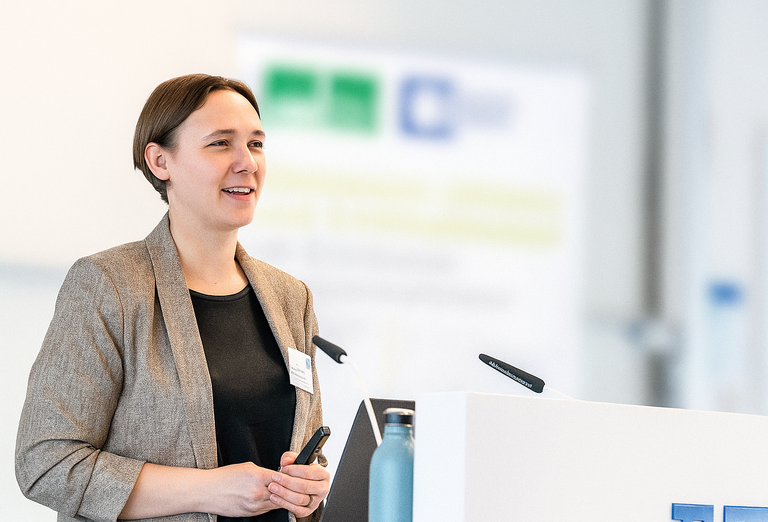
Lisa works as a professor of physics education at Bielefeld University. Her research focuses on the effects of technology on individual learning processes, the development of scientific literacy within the context of inclusive physics education, as well as the professional development of pre- and in-service physics teachers. In her research, the experiment, as a key element of physics education, is of particular importance.
Lisa earned her B.Sc. and M.Ed. in physics and mathematics at the University of Bremen. After her doctorate at the University of Münster, she worked at the California Science Center Los Angeles (USA) in the exhibit research department and as an educational instructor at the hands-on science summer camps. After returning to Germany, she completed her postdoctoral studies at Leuphana University Lüneburg. Lisa was the management and scientific director of the Zukunftswerkstatt Buchholz, a student laboratory near Hamburg. In 2023, she moved to Bielefeld University, where she has served as the head of physics education ever since.
Photo credits: Prof. Dr. Lisa Stinken-Rösner
Dr. Julia Windmiller (Hamburg) - Kalenderwoche 25
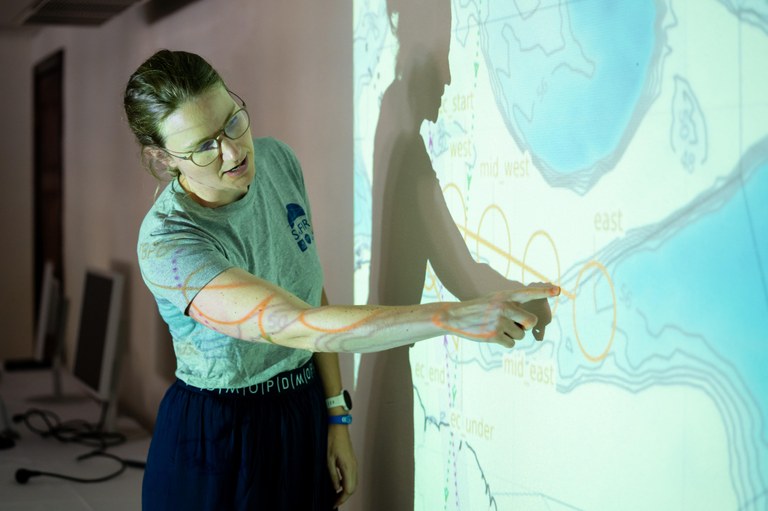
Photo credits: Tristan Vostry
Linda Qerimi (München) - Kalenderwoche 24
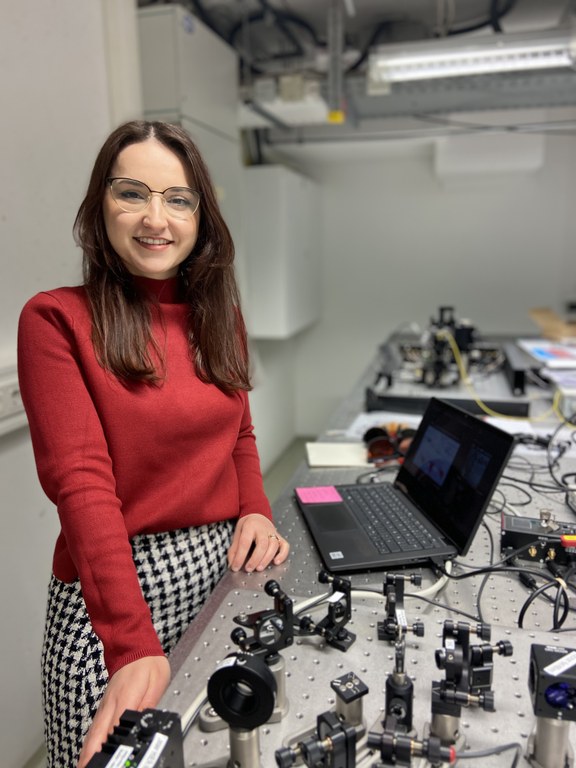
Linda is a PhD candidate at LMU Munich at the Chair of Physics Education Research under Prof. Kuhn, specializing in quantum physics and quantum technologies. After completing her state examination in mathematics and physics, she consciously chose an academic path to explore how key concepts of quantum technologies can be conveyed in a comprehensible and sustainable way through representations.
In her dissertation, she investigates how learners develop a deeper understanding of fundamental principles of quantum computing – such as superposition, quantum measurement, and entanglement – when these concepts are presented using suitable qubit representations. Her research focuses in detail on the mechanisms of qubit representations and aims to identify how their design, function, and task-related aspects support conceptual understanding across different audiences, ranging from quantum experts to high school students (secondary level II). These findings are relevant in a variety of contexts, ranging from carefully designed educational materials to real experimental environments. The experimental implementation is partly studied at PhotonLab, the student laboratory of the Max Planck Institute of Quantum Optics, as well as at the MPS, the Munich Physics SchoolLab at the Chair of Physics Education Research.
Additionally, She is part of Munich Quantum Valley, where she develops educational materials for quantum computing in schools and contributes to science communication initiatives that aim to make quantum concepts accessible and inspire the next generation for the quantum future.
Foto-Rechte: Linda Qerimi
M.Sc. Soňa Ertlová (Garching) - Kalenderwoche 23
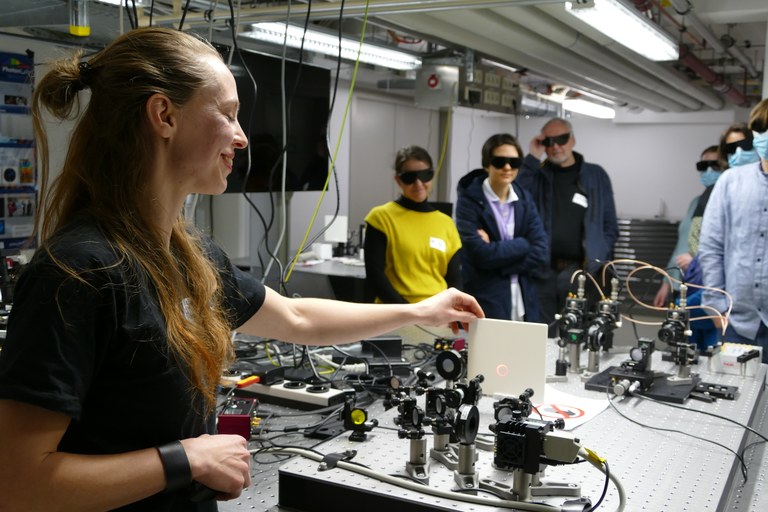
Soňa is a scientific assistant at PhotonLab, a student laboratory located at the Max Planck Institute of Quantum Optics in Garching, near Munich. She earned her Bachelor's and Master's degrees in Physics from LMU Munich, where her Master's thesis focused on microcavity-based laser spectroscopy of atmospheric gases. In addition to her passion for lasers and photonics, she enjoys teaching and popularizing physics, which she began pursuing as a tutor during her studies.
Currently, Soňa works in the student lab, where she explains concepts such as laser physics, attosecond physics, and entanglement on a daily basis. Her main responsibility is to demonstrate the single-photon experiment on behalf of Munich Quantum Valley. She also delivers public lectures, creates outreach programs, and participates in events for the general public, such as "Quantenfreitage im PhotonLab" and "Sheldon vs. Leonard." This outreach role is a dream come true for her.
Foto-Rechte: Silke Stähler-Schöpf
May
Prof. Dr. Ellen Fogh (Garching) - Kalenderwoche 22
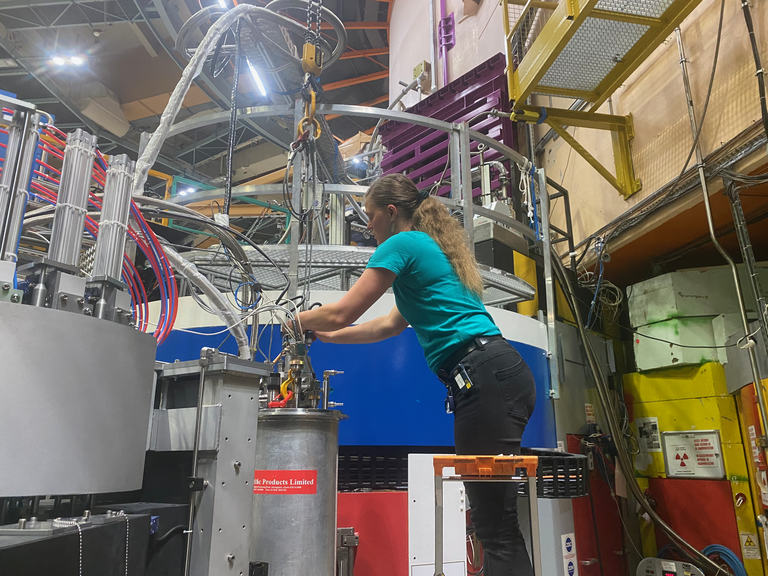
Ellen is an experimental condensed-matter physicist at the Technical University of Munich. Her expertise lies in using neutron scattering techniques in combination with magnetic fields and pressures to investigate how magnetic moments (spins) interact within a material. The collective behavior of such systems may result in intriguing quantum states and phenomena of fundamental interest but also with potential applications in quantum technology. The aim is to understand how these states are formed and how to control them.
Ellen studied physics and nanotechnology at the Technical University of Denmark, where she also continued with her doctoral studies. Subsequently, she worked as a postdoctoral researcher at the École Polytechnique Fédérale de Lausanne in Switzerland. She was appointed professor of Quantum Magnetism at TUM in 2025.
In the photo, Ellen is setting up a high-pressure neutron scattering experiment at the Institute Laue-Langevin in Grenoble.
Foto-Rechte: Jeppe Cederholm
PD. Dr. Venera Weinhardt (Heidelberg) - Kalenderwoche 21
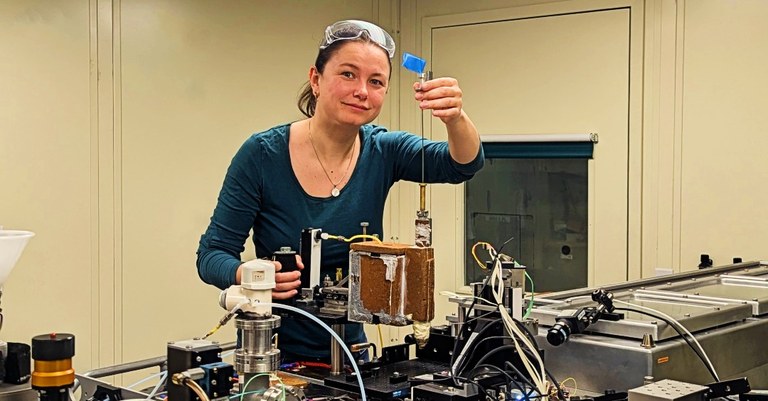
Venera is a physicist working in the exciting and fast-developing field of X-ray imaging for over 10 years, building expertise and an internationally recognized group at the Centre for Organismal Studies, Heidelberg University. She is an expert in life science applications, especially in the development and adaptation of new methods, such as new contrast mechanisms, in vivo/low dose imaging, and novel geometries, including development for restoration, image formation, and analysis workflows. These advancements have great potential for refining medical understanding and therapeutic development when used in conjunction with other imaging modalities and tabletop systems.
Awarded the Walter Benjamin Program from German Research Foundation, she joined the group of C. Larabell (Department of Anatomy UCSF, Molecular Biophysics and Integrated Bioimaging Division LBNL), where she was working on improving the spatial resolution and image quality (multiple resolutions and PSF corrections) of soft X-ray microscopy (SXT), bringing new insights on cells in normal and infected with various viruses (HSV-1 virus, SARS-CoV-2, Dengue, Ebola, etc.) conditions.
She has been advancing laboratory solutions for soft X-ray tomography imaging, which received support from the EU Research and Innovation Act (CoCID project). She demonstrated the capabilities of quantitative and high-throughput SXT imaging on cells afflicted with pathogens, showcasing the potential of this cutting-edge technology. To complement structural information from SXT, she also develops correlative imaging modalities, including axial super-resolution fluorescence microscopy for imaging cancer and immune cells supported by the MSCA doctoral networks of the EU (https://clexm.eu/). Recently, Venera received an ERC Synergy Grant for a pioneering biomedical research project, where she will develop a microbiopsy tool for rapid, targeted tissue sampling, high-tech 3D imaging with nanometer-resolution, and novel AI-based data analysis approaches to uncover hidden patterns and structures at the subcellular level.
Foto-Rechte: PD. Dr. Venera Weinhardt
Dr. Karoline Schaeffner (Garching) - Kalenderwoche 20
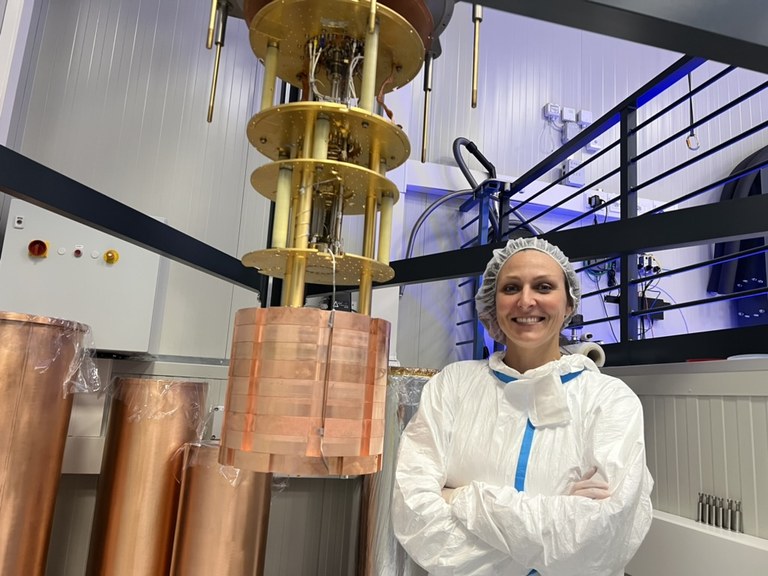
The COSINUS experiment, which Karoline is the technical coordinator of, aims to develop scintillating cryogenic calorimeters based on sodium iodide crystals that operate at milli-Kelvin temperatures.
The COSINUS technology using quantum sensors presents a unique and model-independent way of disentangling this long-standing discrepancy in the field of direct dark matter detection.
Foto-Rechte: Dr. Karoline Schaeffner
Dr. Lydia Beresford (Hamburg) - Kalenderwoche 19
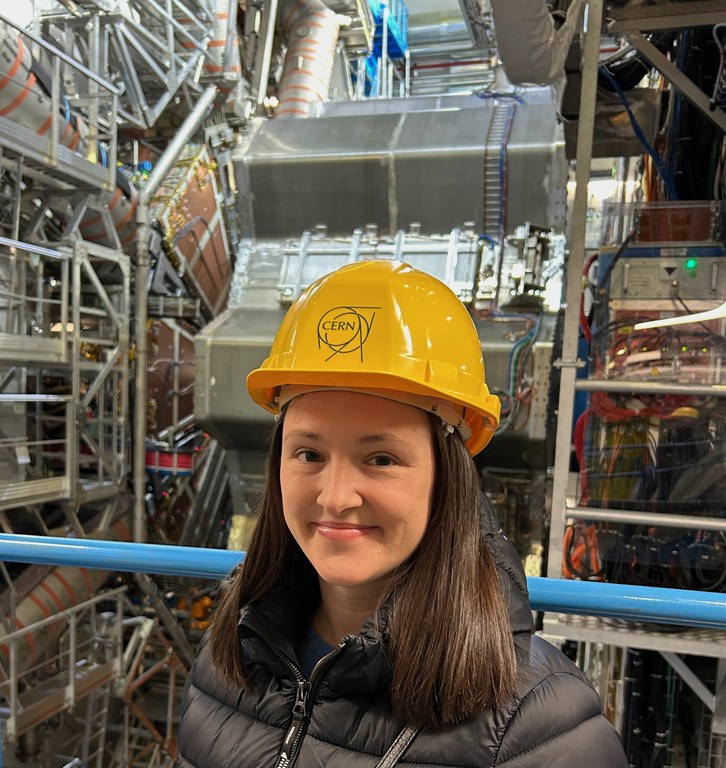
Lydia is leading a Helmholtz Young Investigator Group at DESY in Hamburg. She is an experimental particle physicist and a member of the ATLAS experiment at CERN. Together with her group, she analyses data from the Large Hadron Collider (LHC).
The LHC is the highest energy hadron collider in the world. It has enabled important insights into the nature of fundamental particles. Almost all LHC researchers study these hadron collisions. However, the focus of her group is on using the LHC in a novel way: as the world’s highest energy photon collider.
Photon collisions occur when the accelerated hadrons fly past each other and radiate photons. These radiated photons can collide, producing the highest energy photon collisions ever achieved in a laboratory. In these high energy photon collisions, particles can be created; for example, tau-leptons (a heavier version of the electron). By measuring this process, it can be determined how magnetic the tau-leptons are. Comparing measurement with theoretical prediction tests our understanding of the fundamental particles that make up our Universe.
Foto-Rechte: Dr. Lydia Beresford
April
M.Sc. Anastasia Boushmelev (Siegen) - Kalenderwoche 18
Foto-Rechte: M.Sc. Anastasia Boushmelev
M.Sc. Nina Miller (Munich) - Kalenderwoche 17
Foto-Rechte: M.Sc. Nina Miller
B.Sc. Selina Kunkel (Frankfurt am Main) - Kalenderwoche 16
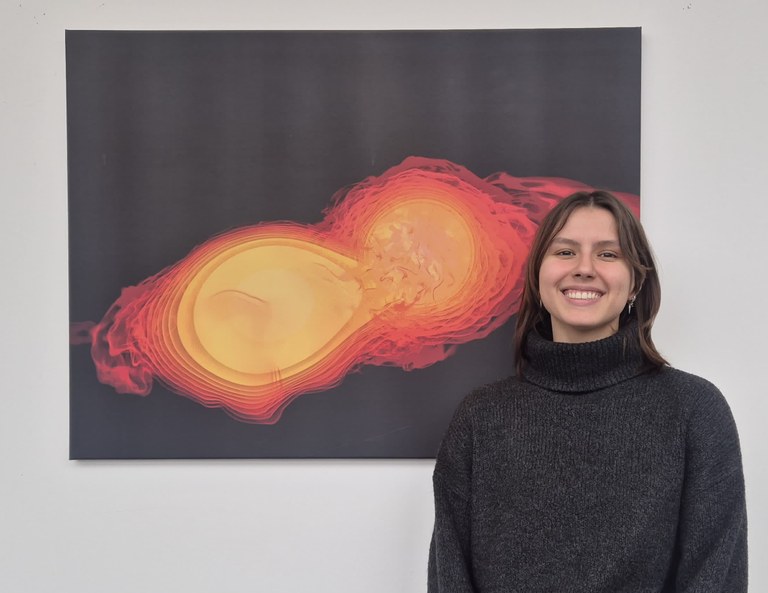
Foto-Rechte: B.Sc. Selina Kunkel
Dr. Valerie Lang (Freiburg) - Kalenderwoche 15
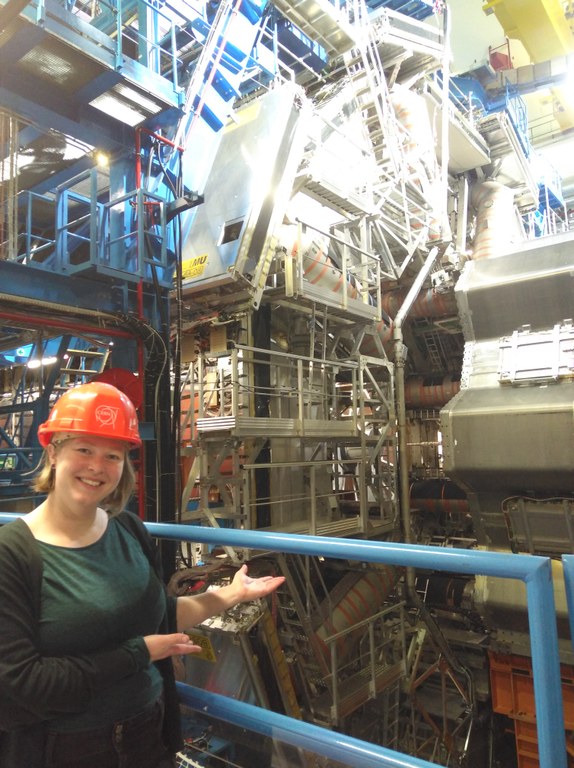
Valerie is an experimental particle physicist at the University of Freiburg, where she leads a research project on the determination of τ-lepton properties, funded by the Baden-Württemberg foundation.
Her research focuses on precisely testing our currently best description of particles and their interactions - as the foundation of our universe - while using the world's largest accelerator and particle physics detector: The Large Hadron Collider (LHC) and the ATLAS experiment at CERN. Precisely measuring properties of the τ lepton as the heaviest sibling to the electron pushes both the accelerator and the detector into new regimes, demonstrating the versatility of large accelerator-based experiments and the fun in operating them. Valerie is also involved in the measurement of the "brilliance" or luminosity of the accelerator - an essential quantity reflecting the total number of particle collisions delivered by the LHC and recorded by the ATLAS experiment, and the reference for any further measurement of particle interactions at the LHC.
Of particular interest to her is sustainability in science and research and its improvement. With "Know your footprint," Valerie developed, together with three colleagues, a carbon calculator for the professional footprint of individual researchers in High Energy Physics and related fields. The goal of this effort is to raise awareness and mitigate climate change by transitioning the scientific system to a carbon neutral future.
Foto-Rechte: Dr. Valerie Lang
March
Dr. Maike Pfalz (Weinheim) - Kalenderwoche 14
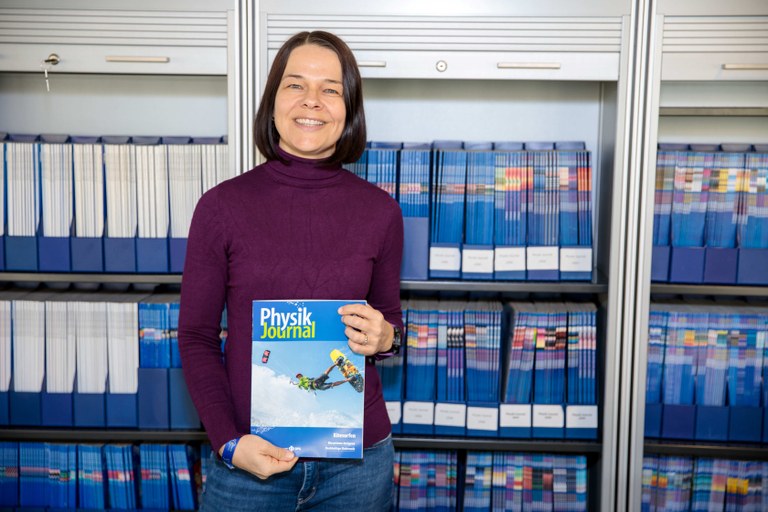
Maike is the editor-in-chief of Physik Journal, the membership journal of the German Physical Society (DPG). After studying to become a teacher in mathematics and physics in Hannover, Maike decided to pursue a PhD focusing on biophysics. While writing her doctoral thesis, she realized that she greatly enjoyed writing and that it could be the right career path for her. Immediately after completing her PhD, she undertook a three-month internship at a textbook publisher, followed by a one-year employment as a physics editor at the same publisher.
In spring 2007, she moved to Weinheim to work for Wiley-VCH as an editor at Physik Journal, and since late summer 2015, she has been leading the journal. The most exciting aspect of her job is the close contact with renowned researchers from all areas of physics. Through her work at Physik Journal, she has learned more than in some physics lectures.
Foto-Rechte: Mario Müller
M.Sc. Sarah Louisa Pitz (Frankfurt am Main) - Kalenderwoche 13
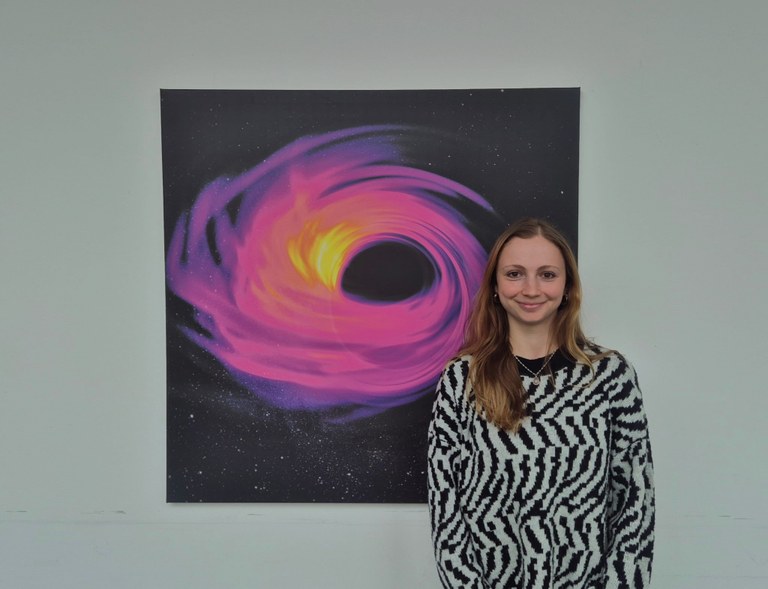
Foto-Rechte: Sarah Louisa Pitz
Dr. Hanieh Fattahi (Erlangen) - Kalenderwoche 12
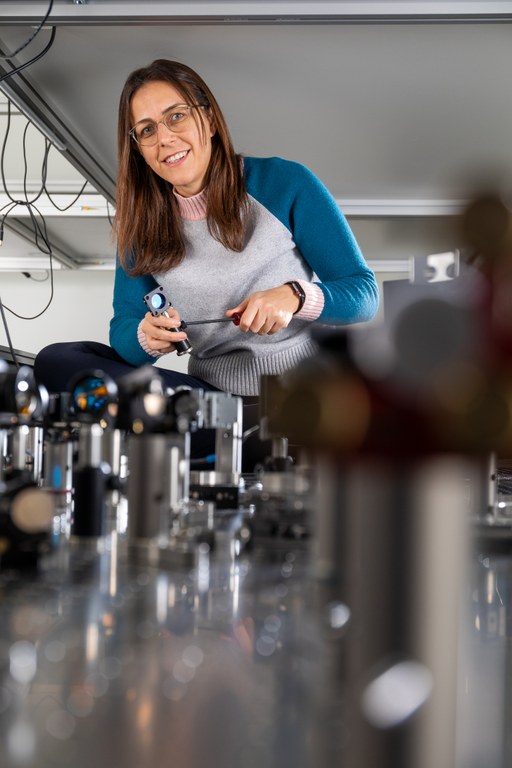
Her research focuses on advancing label-free sensing and imaging technologies by "Femtosecond Fieldoscopy," an approach for the direct detection of the electric field of light. Moreover, she is advancing sustainable solutions for space exploration by developing low-threshold solar lasers.
In 2024, she received an ERC Consolidator Grant to advance 'Label-free microscopy' research.
Foto-Rechte: Axel Griesch
M.Sc. Bianca Lauster (Mainz) - Kalenderwoche 11
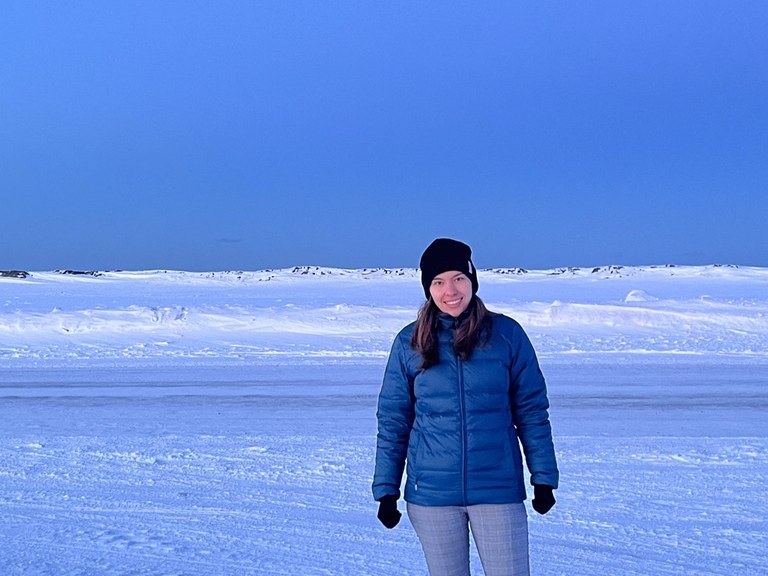
The photo was taken during the instrument set-up in Utqiagvik, Alaska, in December 2023.
Foto-Rechte: M.Sc. Bianca Lauster
Dr. Friederike Ihssen (Heidelberg) - Kalenderwoche 10
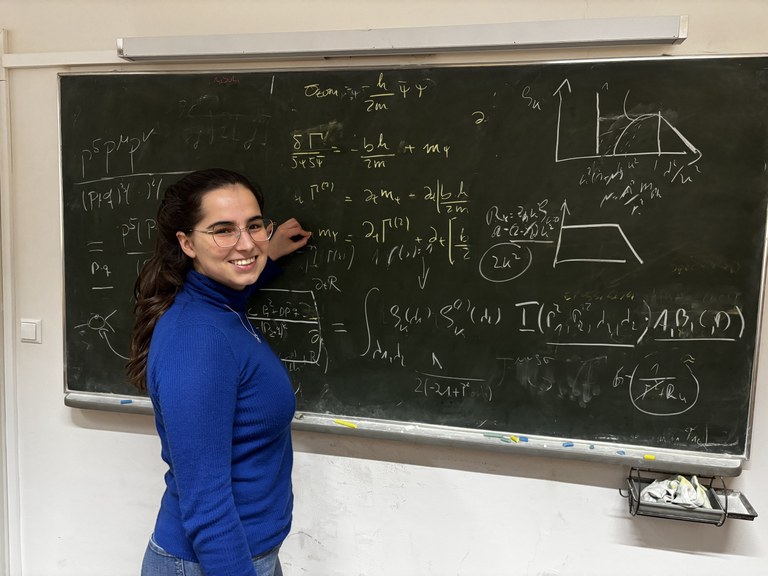
Friederike is a postdoctoral researcher at the Institute for Theoretical Physics in Heidelberg within the Cluster of Excellence STRUCTURES. Her research focuses on describing emergent macroscopic phenomena and phase transitions in quantum field theory, such as the process of dynamic chiral symmetry breaking in the theory of strong interactions, which is known to generate over 99\% of mass in nucleons.
'The whole is greater than the sum of the parts' certainly holds true in strongly correlated systems: Here, microscopic constituents, for example, quarks, form structures at macroscopic scales, e.g., pions and nucleons, whose properties are not only defined by the quantum numbers of its parts but also by fluctuation physics. These systems are often not accessible using standard perturbative calculations.
In her work, Friederike develops the conceptual mathematical and numerical tools to perform non-perturbative calculations in quantum field theory. Her focus lies in particular on the functional renormalization group, which allows to quantify the behavior of theories with changing scales.
Foto-Rechte: Franz R. Sattler
February
Dr. Corinna Kufner (Jena) - Kalenderwoche 9

Corinna is a photophysicist at Leibniz Institute of Photonic Technology (IPHT) Jena, where she studies the influence of light on the emergence of life in the universe.
During her Postdoc at Harvard University, she discovered the light-induced self-repair of short RNA sequences and contributed to an understanding of the first genomic sequences available on early Earth.
Since February 2025, she has led the research department "Photonic Abiogenesis" as a CZS Nexus fellow at Leibniz IPHT, where she seeks to expand the understanding of photochemical mechanisms in astrobiology and modern medicine. Specifically, her research involves the investigation of the emergence of biological functionality and the role of UV light as selection pressure in the emergence of the molecular building blocks of life.
Foto-Rechte: Stela Todorova, Leibniz-IPHT
Dr. Anna Seiler (ETH Zurich) - Kalenderwoche 8
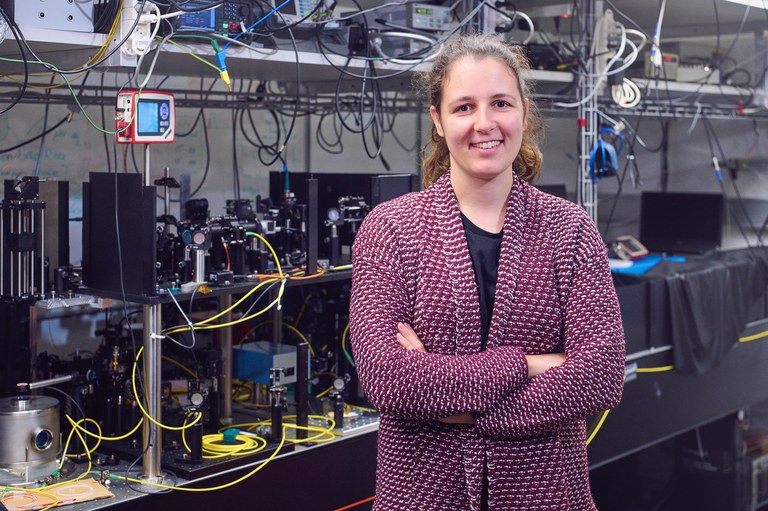
Foto-Rechte: Kilian Kessler/D-PHYS/ETH Zürich
M.Ed. Ann-Sophie Meyer (Duisburg-Essen) - Kalenderwoche 7
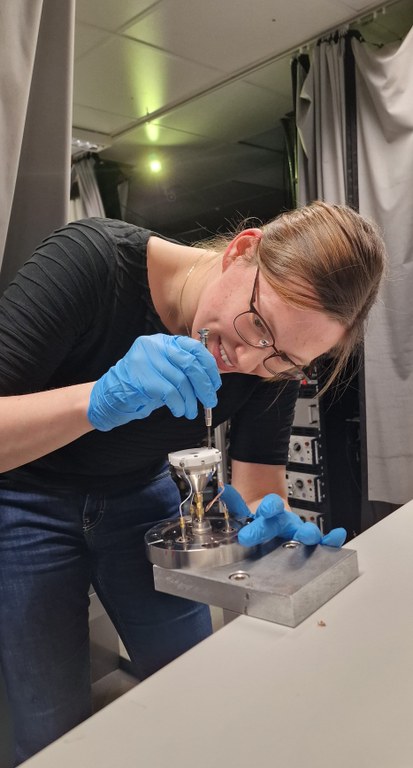
Ann-Sophie is a PhD student in Marika Schleberger's group at the University of Duisburg-Essen. She received her Master of Education in mathematics and physics with the goal of becoming a teacher. However, after completing her degree, she decided to embark on a research career and her doctorate in physics. As part of the CRC 1242, her research focuses on ultrafast non-equilibrium dynamics in condensed matter, particularly through time-resolved ion-induced photoelectron emission spectroscopy.
Simulations predict that the interaction and relaxation processes within the electronic and phononic systems following an ion impact occur on timescales ranging from sub-picoseconds to nanoseconds. Experimentally verifying these dynamics, however, poses a real challenge due to the precision required to pinpoint the ion impact in time and the creation of a suitable (sub-)picosecond ion pulse. Within the framework of Project C05 of the CRC 1242, such a source has been developed, enabling the creation of picosecond ion pulses via femtosecond photoionization of noble gas atoms.
Building on this achievement, Ann-Sophie is conducting the world ́s first pump-probe experiment using ions as a pump source. Her work investigates ion-induced non-equilibrium dynamics in solids, providing unprecedented experimental insights into these processes. This research represents a groundbreaking step in understanding the fundamental ultrafast dynamics triggered by ion impacts.
Foto-Rechte: Ann-Sophie Meyer
Dr. Christina Knapek (Greifwald) - Kalenderwoche 6
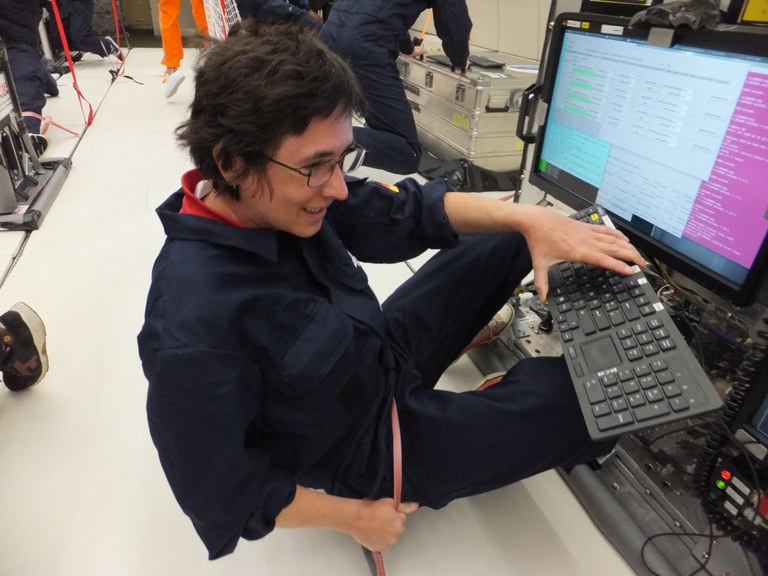
Christina is an experimental physicist at the University of Greifswald. She works on a project to design and build a facility for research on complex, or dusty, plasma under microgravity conditions onboard the International Space Station (ISS). To investigate scientific questions and test the functionality of the equipment for the future facility, she regularly participates in parabolic flight campaigns (see photo), which provide short periods of reduced gravity. She aims to advance the experimental possibilities and scientific outcomes of her research field, in collaboration with space industry and an international group of scientists.
Christina obtained her PhD in physics at the Max Planck Institute for Extraterrestrial Physics (MPE) in Garching and the Ludwig Maximilian University of Munich in 2010. She continued her research on complex plasmas at MPE with the aim to design a facility for complex plasma research onboard the ISS. In 2014, this work was continued at the German Aerospace Center (DLR) in Oberpfaffenhofen, where she was appointed leading project scientist for the space project. She initiated the transfer of the project, funded by the DLR German Space Agency, to the University of Greifswald in 2022.
Foto-Rechte: Dr. Christina Knapek
January
Dr. Christiane Klein (York, UK) - Kalenderwoche 5
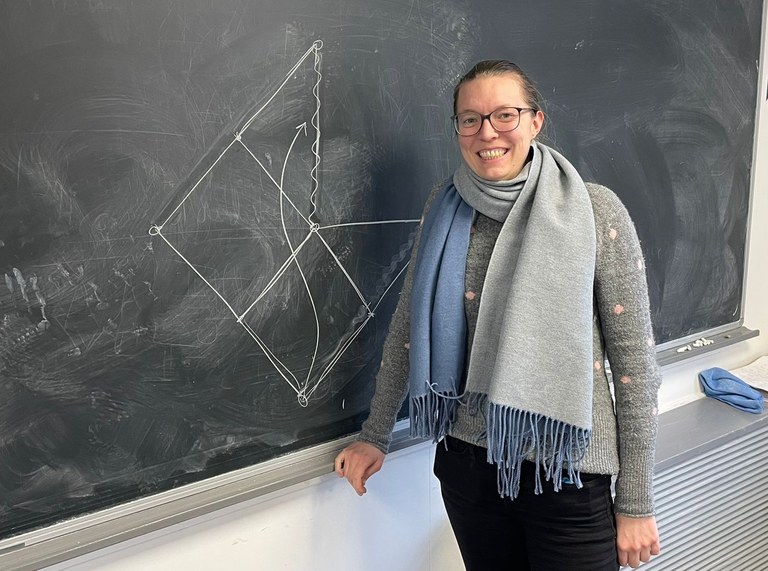
After a one-year postdoc position in Grenoble, she is now a Walter Benjamin fellow at the University of York, where she continues to work on quantum field theory on curved spacetimes within the algebraic approach. That includes the construction of physically reasonable states, which is a highly non-trivial problem in curved spacetimes, but also the answer to more conceptual questions involving the theory of measurements within algebraic quantum field theory.
Foto-Rechte: Daan Janssen
Dr. Andrea Bergschneider (Bonn) - Kalenderwoche 4
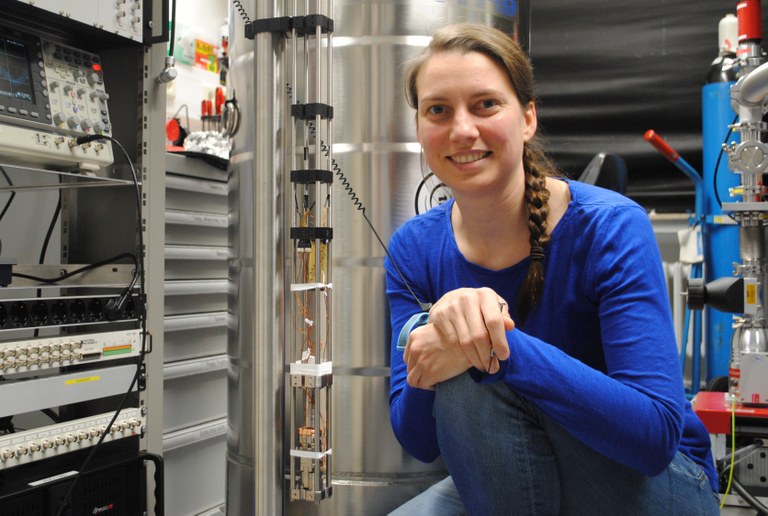
Andrea is an experimental physicist at the Institute of Physics of the University of Bonn, where she explores quantum phenomena in two-dimensional systems using two experimental platforms: ultracold quantum gases and van der Waals semiconductors.
During her Master's and PhD, Andrea focused on deterministic few-atom systems in optical tweezers. In these ultracold-atom experiments she developed a new atom-resolved imaging technique and studied the built-up of strong correlations and quantum entanglement. Drawn by her interest in quantum optics and condensed matter, she pursued a postdoc at ETH Zurich, where she studied cryogenically cooled two-dimensional monolayer semiconductors -- layered crystals bond by weak van der Waals forces. Her work included investigating their optical properties and interactions within optical cavities.
In 2021, Andrea joined the University of Bonn as a senior researcher, where she co-supervises an experiment on fermions in two-dimensional optical lattices. Since 2023, she has led an independent project on transition-metal dichalcogenides as part of the Cluster of Excellence "Matter and Light for Quantum Computing." Her unique expertise in both synthetic and natural two-dimensional materials allows her to connect atomic, quantum optic, and solid-state quantum science and transfer ideas between these fields.
Foto-Rechte: Moritz Scharfstädt
Dr. Lisanne Sellies (Zurich, Switzerland) - Kalenderwoche 3
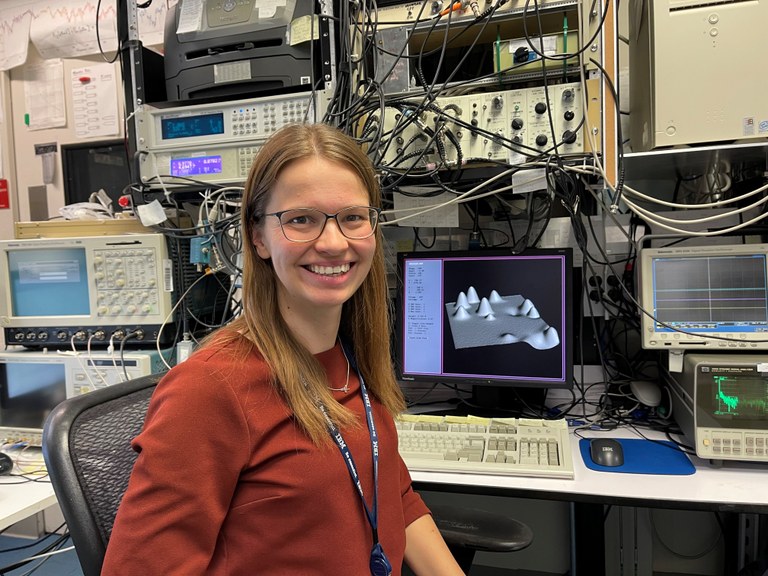
Lisanne receives the Gustav Hertz Prize 2025 from the DGP 'For the development of a new method that for the first time measured electron spin resonance with a scanning force microscope on individual molecules.'
Foto-Rechte: Gregory Czap
Dr. Kristiane Bernhard-Novotny (Geneva, Switzerland) - Kalenderwoche 2
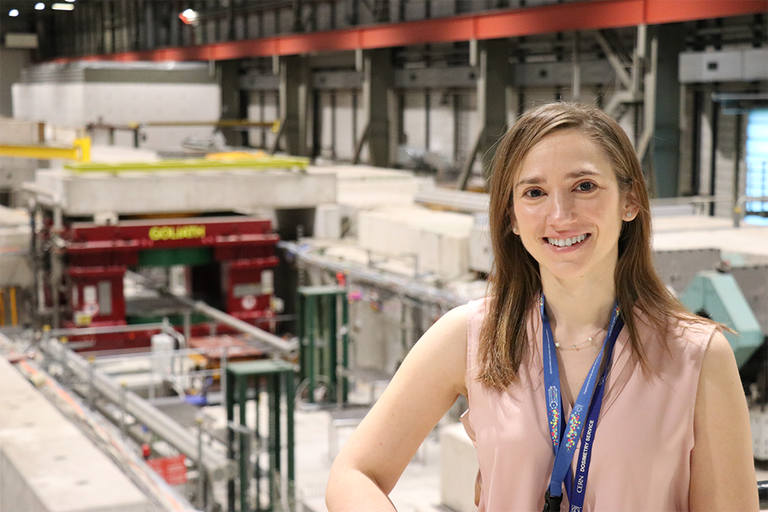
Now part of CERN’s Experimental Areas group, Kristiane works as a Communications Officer, combining her technical expertise with effective science communication. She supports a wide range of projects, including the Physics Beyond Colliders Initiative, the International Muon Collider Collaboration, and the many fixed-target experiments at CERN. In addition to creating tailored communication strategies and writing articles for CERN’s website and international journals, she actively advocates for these projects, ensuring they receive the visibility and support they deserve within the scientific community and beyond.
Foto-Rechte: Laurie Nevay
Dr. Johanna K. Jochum (Garching) - Kalenderwoche 1
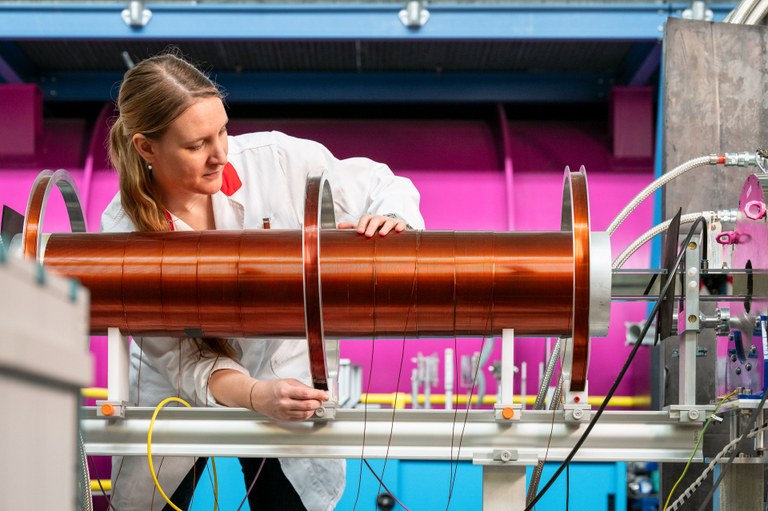
Johanna's scientific interests center on superconductivity and magnetic phenomena, including magnetic phase transitions and unconventional magnetic order. During her PhD at KU Leuven, she explored interface phenomena in magnetic nanostructures, gaining extensive experience in large-scale facilities for x-ray and neutron scattering to investigate the magnetic and vibrational properties of these systems. Her research continues to bridge experimental techniques and fundamental insights into the complex behaviors of materials.
Johanna completed her Bachelor's and Master's degrees at ETH Zurich. For her Master's thesis in the group of Bertram Batlogg, she studied "Transport properties in SmFeAs(O, F)," delving into the fascinating field of iron-based superconductors. She brings this rich background and her passion for cutting-edge instrumentation to her current work, contributing to the development of neutron scattering techniques and the understanding of magnetic systems.
Foto-Rechte: Astrid Eckert, TUM
Hier geht es zu den Teilnehmerinnen der Physikerin der Woche 2018, 2019, 2020, 2021, 2022, 2023 und 2024 Projekte.