Physikerin der Woche 2026
Since January 2018, the German Physical Society's Equal Opportunities Working Group (AKC) has been spotlighting women in physics based in Germany or German women working abroad.
If you are a woman working in the field of physics in Germany or a German woman working in physics abroad and would like to showcase your work through the "Physikerin der Woche" initiative, then don't hesitate to get in touch with Dr. Ulrike Boehm at  . This opportunity is open to women in physics at all career stages, whether they are from academia or industry. Moreover, you are also welcome to recommend suitable candidates for the initiative.
Articles and posters about the initiative are available in the April 2018 and 2021 / 2022 / 2023 issues of the Physik-Journal. Feel free to print and display these posters at your institution. For past participants, see resources from: 2018, 2019, 2020, 2021, 2022, 2023, 2024 und 2025.
For more on career preparation for physicists, visit the Berufsvorbereitendes Programm der DPG and DPG-Berufsvorbereitung online der jDPG
September
Dr. Melina Filzinger (Braunschweig) - Kalenderwoche 37
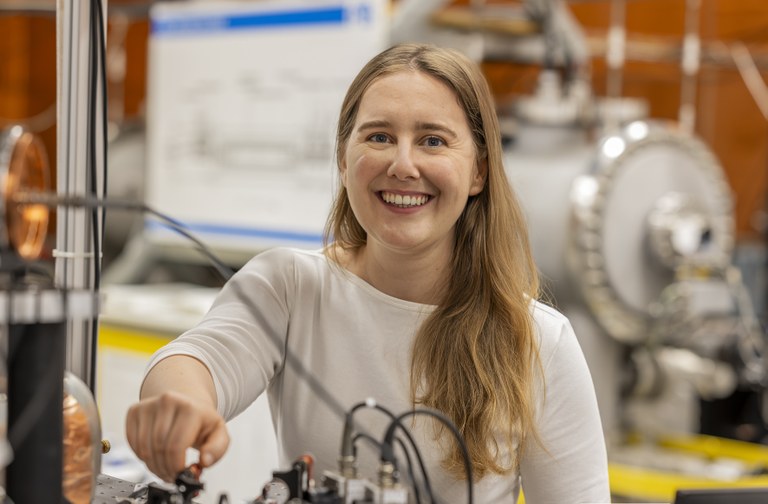
Photo credits: PTB
Dr Eleni Dalaka (Erlangen) - Kalenderwoche 36
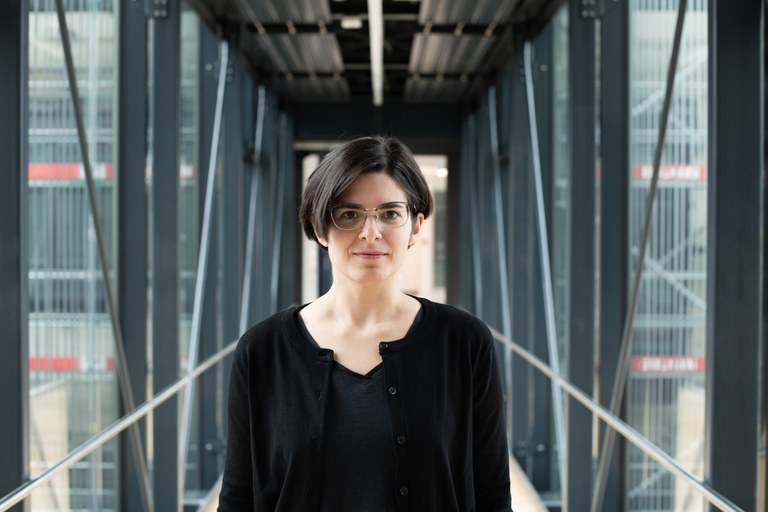
(IBEC), where she worked on bioengineering, tumour immunology and mechanobiology. Since July 2025, Eleni leads the “Cancer Biomechanics” group at the Max-Planck-Zentrum für Physik und Medizin in Erlangen, working at the interface of mechanics, optics and biology. Her research focuses on how mechanical cell forces, multicellular physical interactions and mechanical plasticity shape cancer metastasis. Her lab uses novel optical techniques to image and quantify the mechanical state of cancer cells and organoids, and identify the link between cell mechanics and cancer progression.
Photo credits: Elisabeth Offial
August
Dr. Anna Taubenberger (Dresden) - Kalenderwoche 35
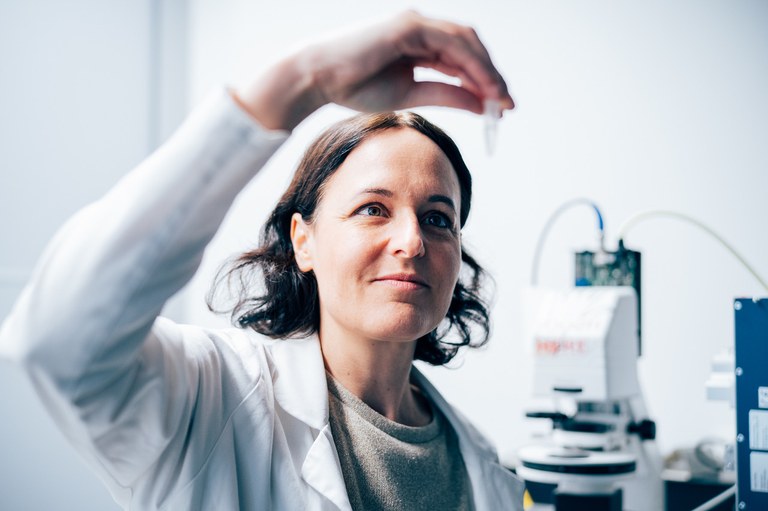
Photo credits: Magdalena Gonciarz, TU Dresden
Dr. M.Sc. Dipl.-Ing. Ann-Katrin Exeli (Giessen) - Kalenderwoche 34
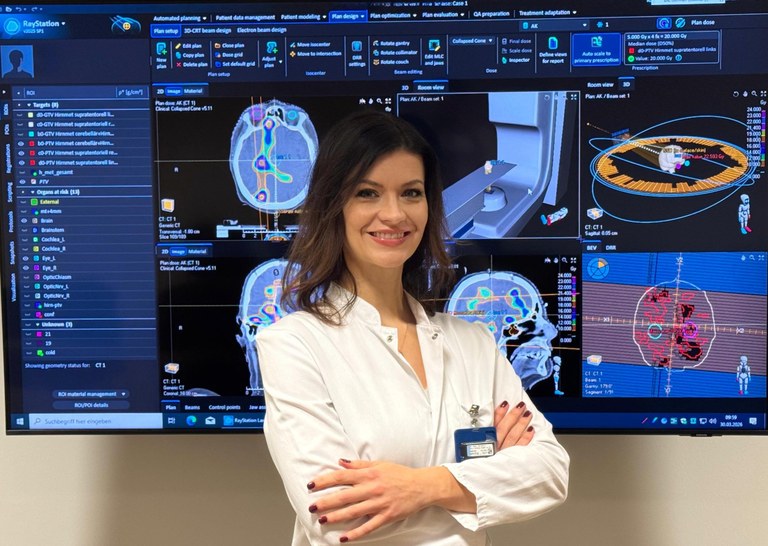
Ann-Katrin is the Head of Medical Physics in the Department of Radiotherapy at the University Hospital Gießen. She completed her PhD at Paracelsus Medical Private University in Salzburg.
As a medical physicist specializing in radiotherapy, her work focuses on applying physics to ensure the safe and effective delivery of high-precision radiation treatments for cancer patients using a medical linear accelerator. Her responsibilities include the quality assurance of radiation therapy equipment, the optimization of treatment plans, the precise calculation of radiation doses, and troubleshooting any technical issues that may arise during treatment.
In this capacity, her role bridges clinical expertise with cutting-edge technology, contributing to personalized, evidence-based cancer care through tailored treatment concepts.
Photo credits: M.Sc. Fatima Zahra Ouahmane
Dipl.-Math. Regina Lauffer (Eresing) - Kalenderwoche 33
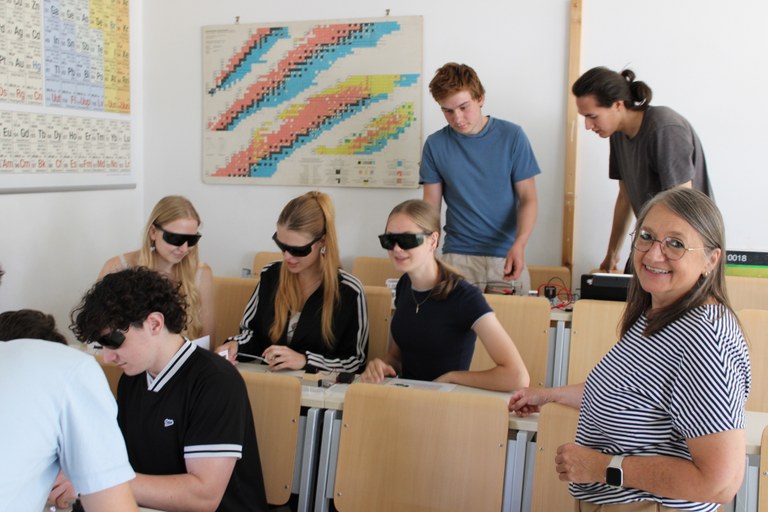
Photo credits: Stefan Landwehr
Dr. Laura Guasco (Garching) - Kalenderwoche 32
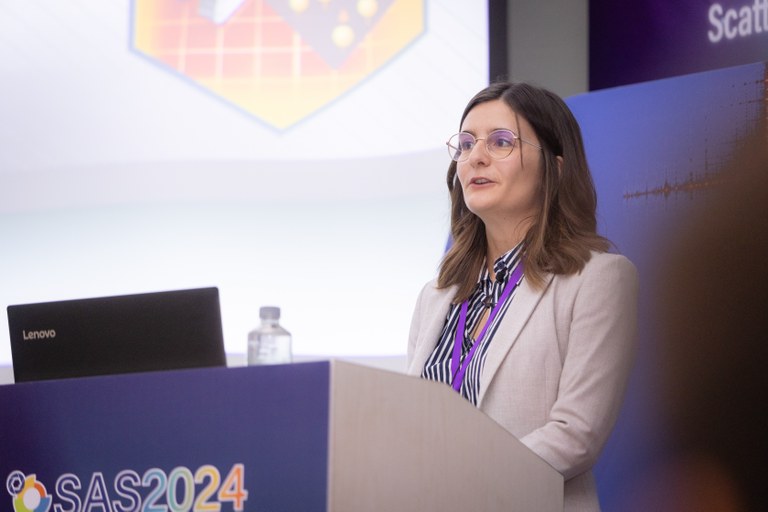
Laura is passionate about clean energy and sustainability, and she has tried to devote her scientific career to finding new solutions through innovative materials and characterisation tools, starting from her undergraduate studies in Materials Science. She has completed her Ph.D. in Physics at the Max Planck Institute for Solid State Research in Stuttgart, where she focused mostly on thin layers and interfaces, and how reduced dimensionality can be a tuning knob for various functionalities.
She is stationed at the Research Nuclear Reactor FRM II, where she conducts her research in the field of experimental condensed matter using large-scale facilities, such as neutron sources and synchrotrons.
In her current role as a postdoc, she focuses on developing methods to study the structural, chemical, magnetic, and electronic modifications that hydrogen induces at the surface of materials. This broad topic, which combines physics, materials science, chemistry, and engineering, aims at bridging fundamental materials science and real-life applications, such as hydrogen sensors, membranes, proton devices, and protective coatings.
Photo credits: Laura Guasco
July
Dr. Svitlana Kondovych (Dresden) - Kalenderwoche 31
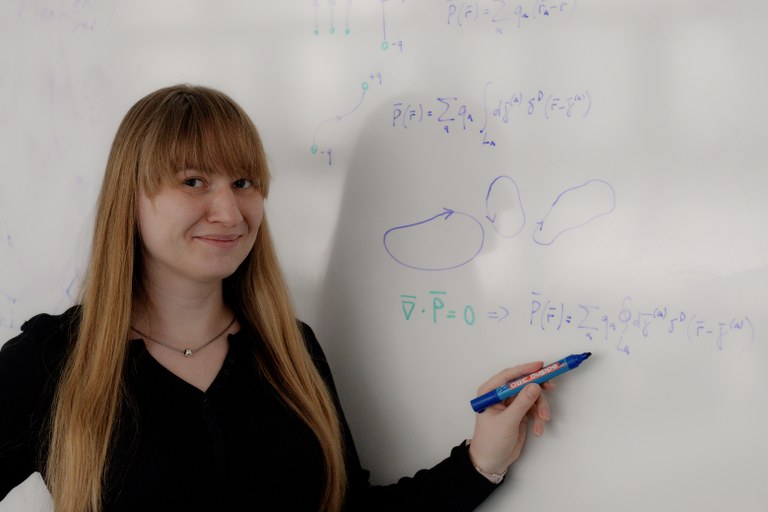
Her research focuses on topological states such as vortices and three-dimensional knotted configurations called hopfions. These structures form when the order parameter is constrained by geometry and intrinsic interactions and are remarkably robust against external perturbations. At the same time, they exhibit unusual collective behavior near phase transitions. Svitlana investigates how geometric confinement and long-range interactions modify such transitions and give rise to new types of critical behavior.
By uncovering how these structures form and evolve, her work establishes general principles for creating and controlling complex states in ferroic materials. This provides a foundation for designing materials with robust functionalities for energy-efficient and resource-conscious technologies.
Photo credits: Thomas Wilk
M.Sc. Laura von Selzam (Erlangen) - Kalenderwoche 30
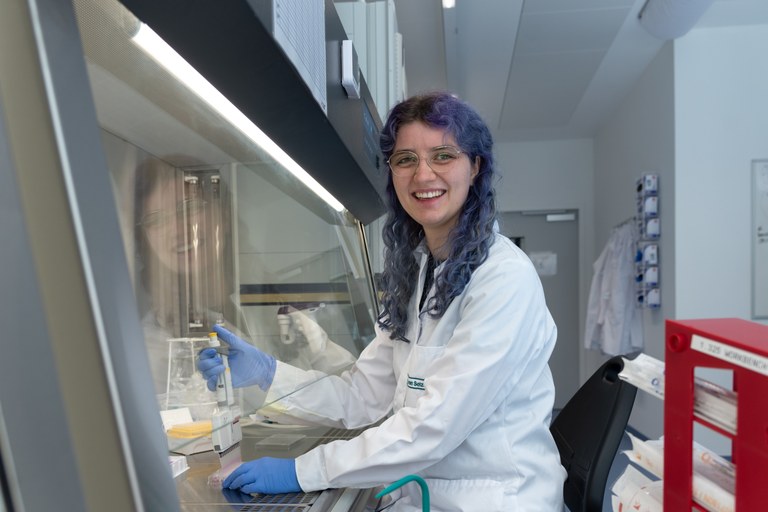
Laura studied physics in Göttingen, where she first worked on cell mechanics in the context of lab-grown muscle tissue. Beyond her research, she enjoys sharing her enthusiasm for physics through outreach formats such as Girls’ Day and public science shows.
Photo credits: M.Sc. Laura von Selzam
PD Dr. Andrea Helen Knue (Dortmund) - Kalenderwoche 29
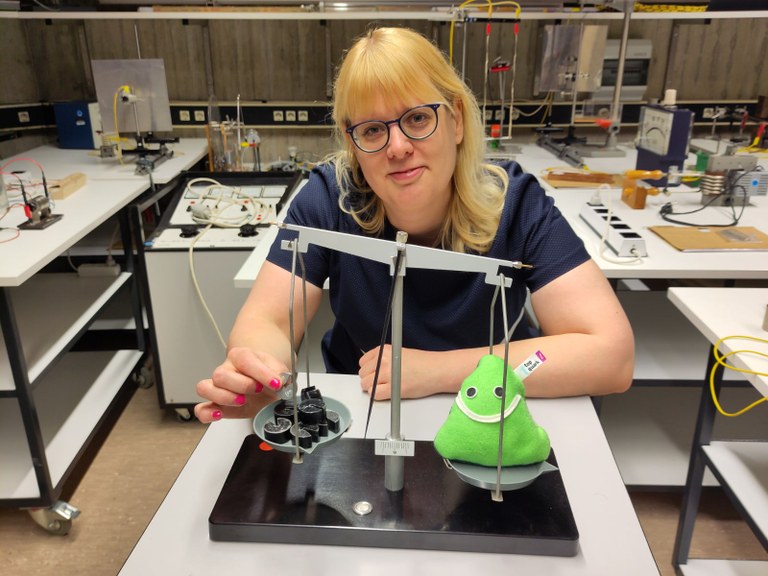
She is especially interested in the spin properties of the top quark in these regions, the newly found pseudo-bound state that two top quarks can form at the production threshold, and the measurement of the top-quark mass (see photo).
Additionally, she has studied the connection between the top-quark and the Higgs boson. Due to the large top mass, the strength of this connection has implications for the stability of our Universe.
Her research is carried out at the ATLAS experiment at the Large-Hadron Collider. Andrea is also part of the new Cluster of Excellence "Color meets Flavor".
Photo credits: PD Dr. Andrea Helen Knue
Dr. Lea Stockmeier (Karlsruhe) - Kalenderwoche 28
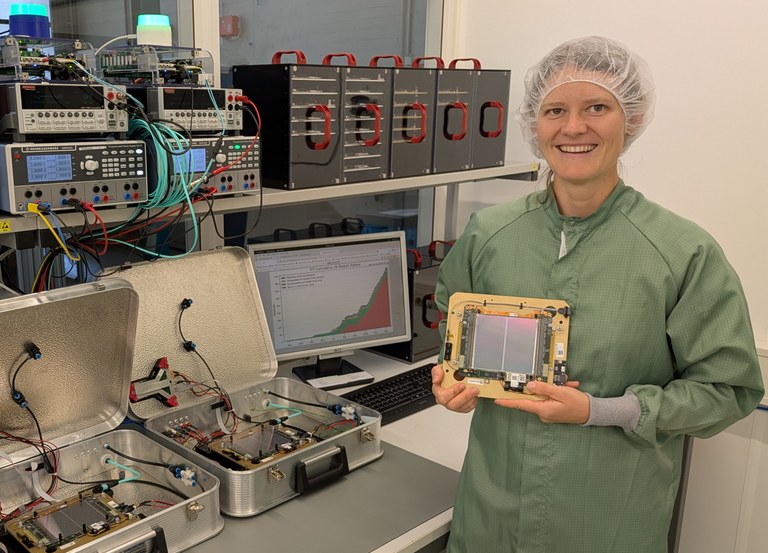
The Large Hadron Collider (LHC) as well as the Compact Muon Solenoid (CMS) experiment at CERN will be upgraded until 2030 to increase the potential of particle physics discoveries. Lea is part of the team building the new innermost part of CMS, a tracker based on silicon sensor modules that will allow the identification of the path of charged particles through the experiment. She performed integration tests with these modules on the tracker’s mechanical support structures to study their performance in a real detector environment and is monitoring the module production at KIT by performing detailed quality tests at every production step. This guarantees that the detector modules survive the 10 years of operation during which the detector cannot be accessed.
Photo credits: Dr. Lea Stockmeier
June
Prof. Dr. Julia K. Vogel (Dortmund) - Kalenderwoche 27
Photo credits: Prof. Dr. Julia K. Vogel
M.Sc. Saskia Plura (Mainz) - Kalenderwoche 26
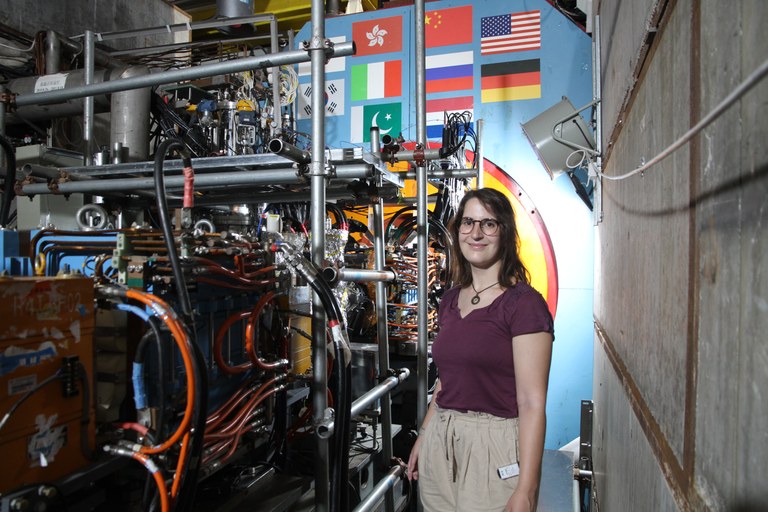
The photo shows Saskia in front of the BESIII experiment in Beijing, China.
Photo credits: Saskia Plura
M.Sc. Nadine Stroehlein (Erlangen) - Kalenderwoche 25
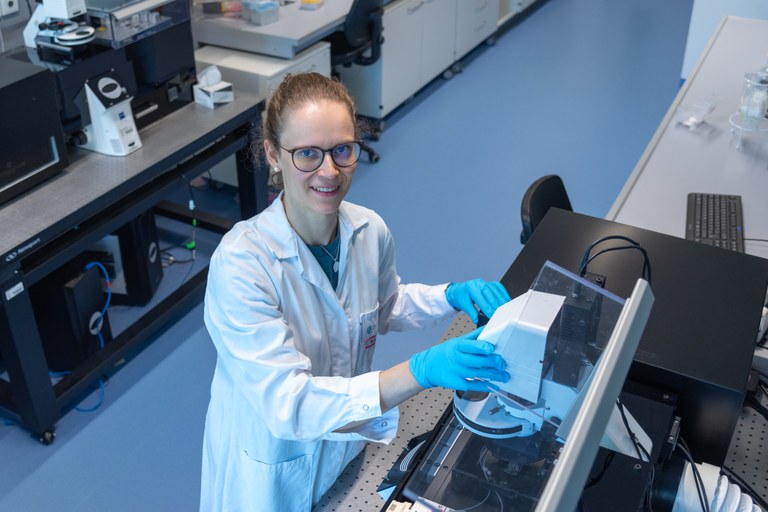
Photo credits: MPL, Susanne Weizens
Prof. Dr. Manami Sasaki (Erlangen) - Kalenderwoche 24
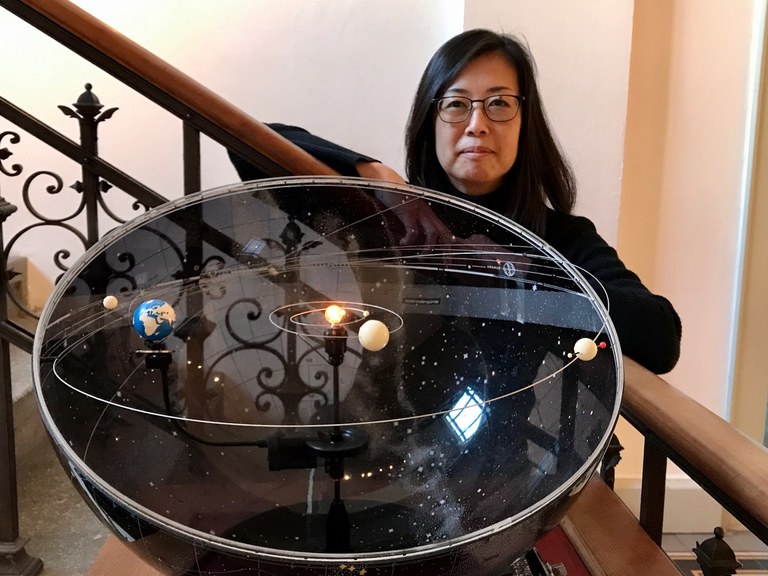
Photo credits: Sara Saeedi
B.Sc. Rebecca Seip (Dresden) - Kalenderwoche 23
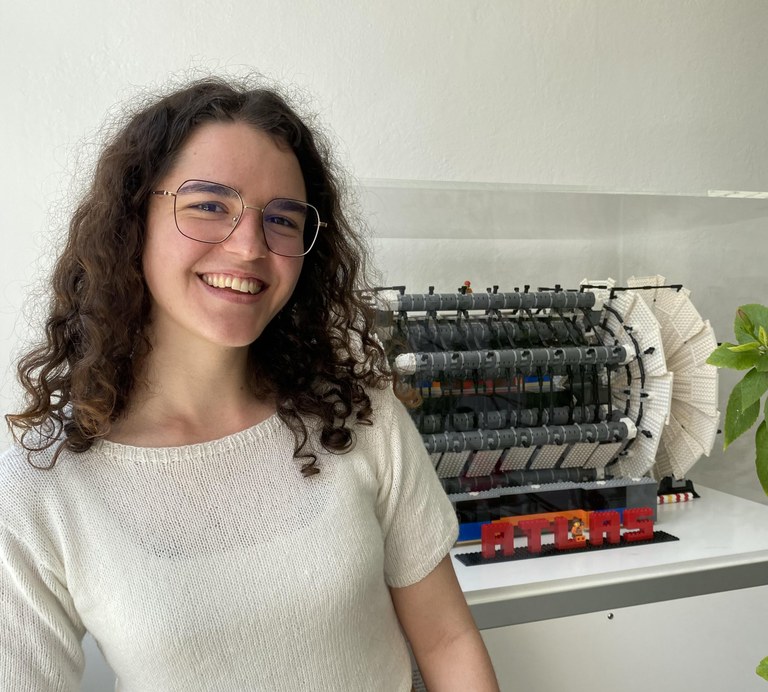
Rebecca is currently pursuing a master’s degree at TU Dresden, specializing in particle physics. She completed her bachelor’s degree in 2024, writing her thesis about polarized W𝛄 production at the LHC within the group of Prof. Siegert and Prof. Kobel in the Institute for Nuclear and Particle Physics at TU Dresden. The group is working on rare processes involving vector bosons, both experimentally with the ATLAS detector and theoretically with the Sherpa simulation program, as well as on the theoretical simulation of LHC measurements.
After her bachelor’s, she studied for one year abroad in Trondheim, Norway, and expects to complete her master’s degree next year.
Alongside her academic work, she is deeply engaged in outreach. She works as a student assistant for Netzwerk Teilchenwelt to support a variety of outreach activities. She especially enjoys working with high school students and sharing her enthusiasm for particle physics with them.
Currently, She is contributing to the development of the hadron therapy masterclass, which is a project day for students to demonstrate how particle physics can be applied to cancer treatment.
Photo credits: B.Sc. Rebecca Seip
May
Dr. Claudia Zech (Munich) - Kalenderwoche 22
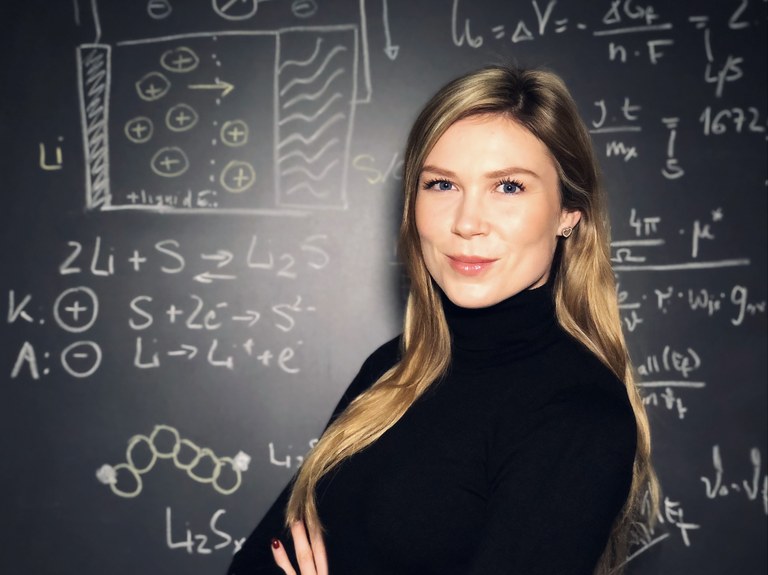
Photo credits: Dr. Claudia Zech
M.Sc. Linda Dalipi (Hamburg) - Kalenderwoche 21
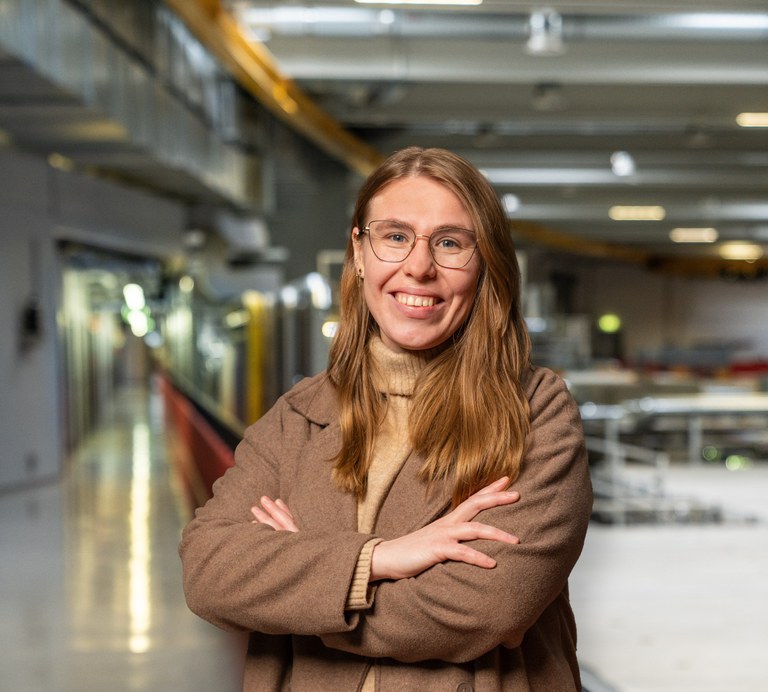
Photo credits: NinetyOne
Dr. Miriam Gerharz (Heidelberg) - Kalenderwoche 20
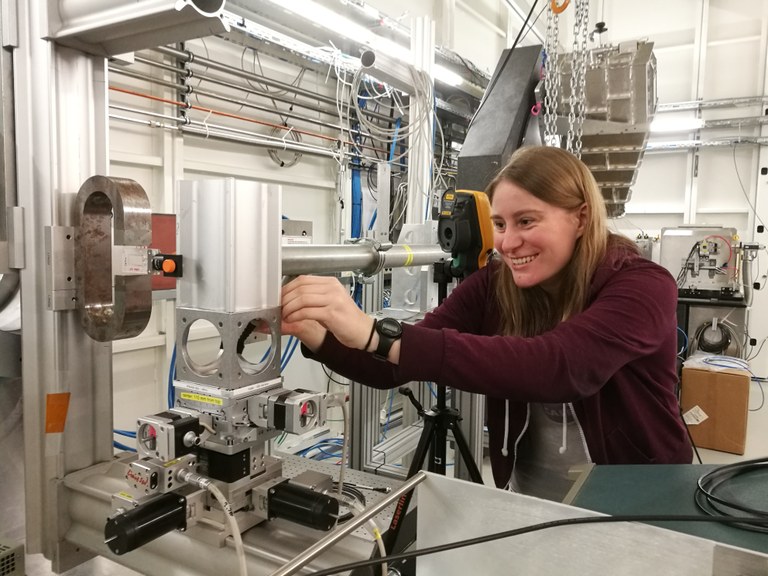
She works with Mössbauer nuclei that, due to their narrow linewidth, provide extreme precision at x-ray energies. To excite those narrow transitions, in their collaborations, they use X-ray free-electron lasers and explore the new possibilities provided by their orders of magnitude higher intensities compared to synchrotrons. Complementing the experiments, she does simulations to gain further insights into the dynamics of the nuclear ensemble. In particular, she looks for new effects at X-ray free-electron lasers or even brighter light sources.
Photo credits: Dr. Miriam Gerharz
M.Phys. Siân Cleaver (Bremen) - Kalenderwoche 19
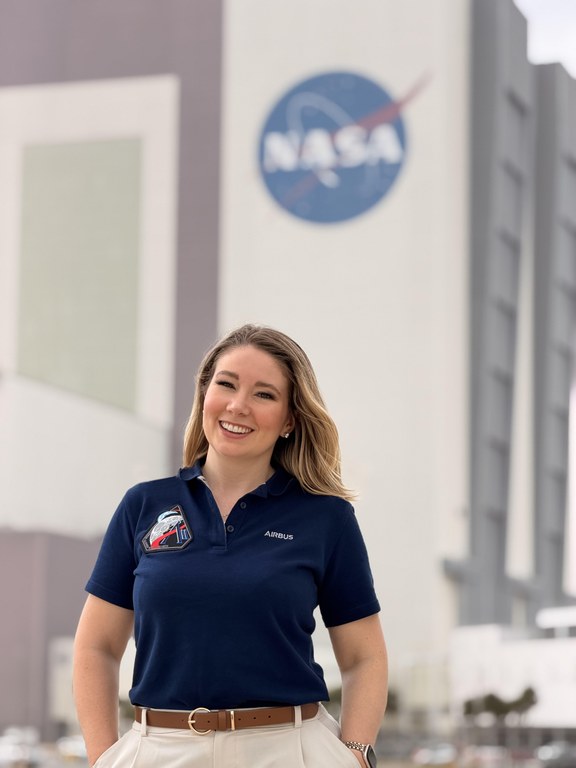
Photo credits: Siân Cleaver
April
M.Sc. Jette Heyer (Hamburg) - Kalenderwoche 18
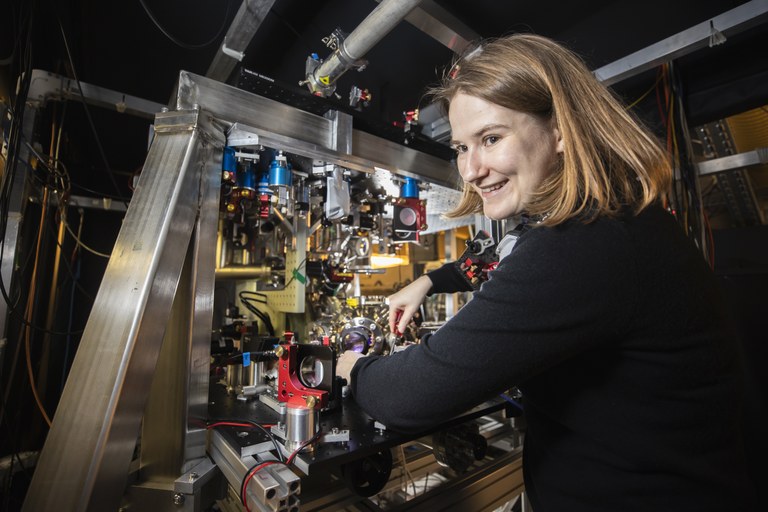
Jette is a PhD student in a collaborative project between the groups of Klaus Sengstock and Markus Drescher at the University of Hamburg and a member of the Cluster of Excellence "Advanced Imaging of Matter". She completed her master's degree in physics at the University of Hamburg and the University of Helsinki.
In her research, she combines ultracold quantum gases with ultrashort laser pulses to investigate quantum phenomena across different regimes. These range from interacting many-body physics, such as ultracold plasma used as controllable model systems for stars and giant planets, to few-body systems like atom-ion hybrid systems enabling studies of cold chemistry. She developed a novel high-resolution detection system using machine learning techniques that integrates ion microscopy and electron spectrometry, including an electrostatic deflector for which a patent application has been filed. This detection unit enables deep insight into the dynamics of quantum systems involving Rydberg atoms, ions, and electrons, opening new possibilities for research in photochemistry, quantum simulations, and quantum computing.
Photo credits: UHH/Esfandiari
Dr. Stephanie Möllmert (Erlangen) - Kalenderwoche 17
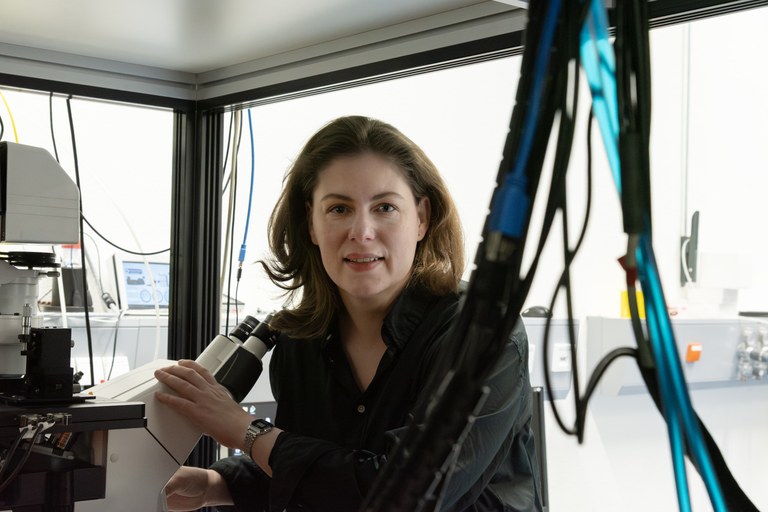
Photo credits: Susanne Viezens
M.Sc. Victoria Voinkova (Stuttgart) - Kalenderwoche 16
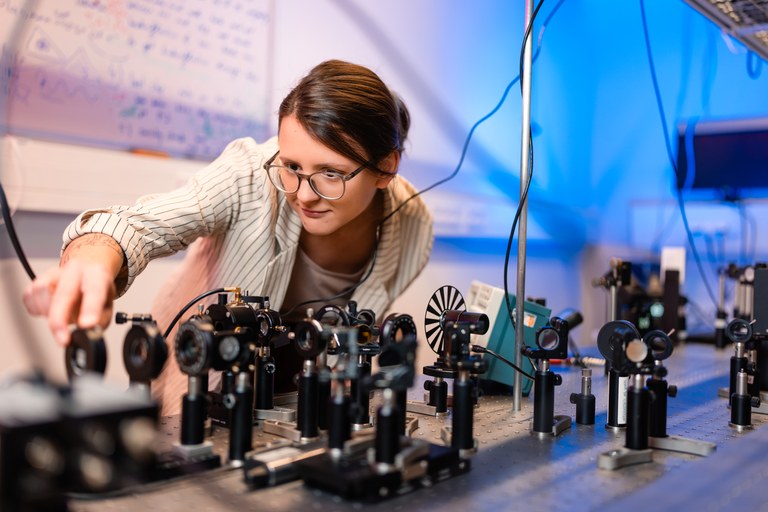
Photo credits: Universität Stuttgart/Ludmilla Parsyak
M.Sc. Jana Schlücking (Dortmund) - Kalenderwoche 15
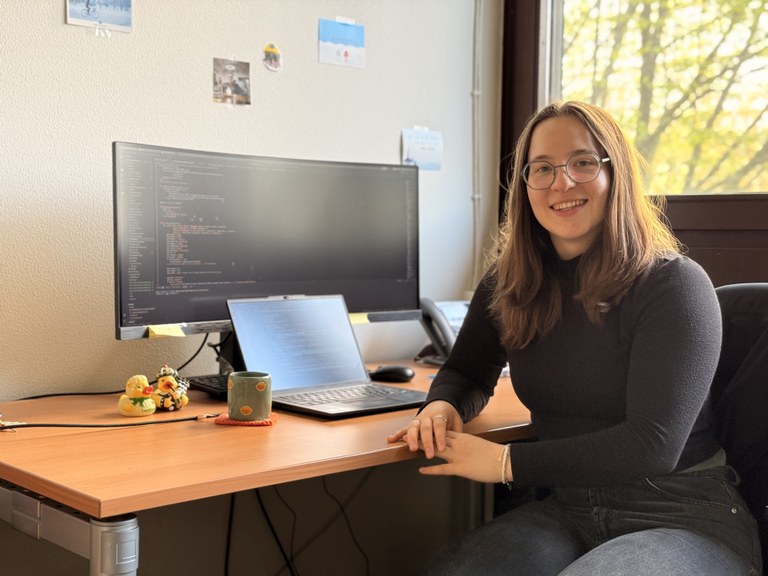
Jana is a theoretical physicist at TU Dortmund in the group "Theory of solid-state nanostructures for quantum technologies", where she recently started her PhD. Last year, she completed her master's studies on the indistinguishability of quantum dot photons. In her PhD, they again work with semiconductor quantum dots, in particular towards using them for reliable emission of single entangled photon pairs. Her work involves mostly numerical simulations and the calculation of photon properties. They work closely together with experimental groups in Austria that are measuring the same things in the lab.
As part of her role, she also works on equal opportunities within the faculty, which is very important to her.
Photo credits: M.Sc. Jana Schlücking
March
Dr. Teresa Valdivia-Mena (Munich) - Kalenderwoche 14
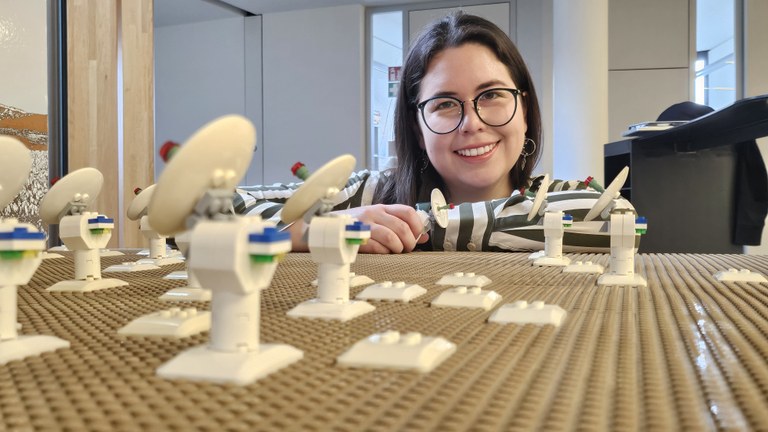
Photo credits: Dr. Teresa Valdivia-Mena
Prof. Dr. Sarah Heim (Hamburg) - Kalenderwoche 13
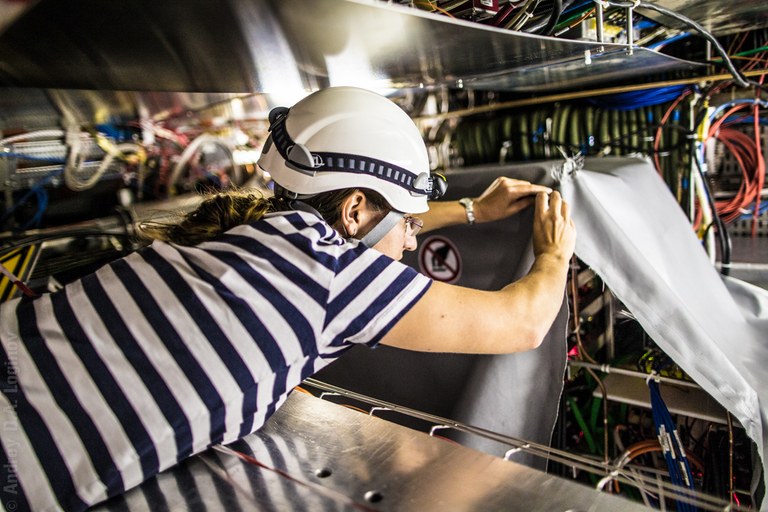
Sarah is an experimental particle physicist. After studying at the University of Heidelberg and Michigan State University, she was a postdoctoral fellow at the University of Pennsylvania. She came to DESY as a Helmholtz Young Investigator group leader and is now a member of the scientific staff as well as a professor at the University of Hamburg. She is a principal investigator of the Cluster of Excellence Quantum Universe.
Sarah uses the data produced by the Large Hadron Collider (LHC) and recorded by the ATLAS detector at CERN to search for answers to some of the fundamental questions that physicists still have about the universe, like the nature of Dark Matter. She does so by making precision measurements of the properties of the Higgs boson and by searching for new particles. She is fascinated by so-far unexplored signatures and the potential of the latest machine learning developments to help solve challenges in particle physics.
No data analysis would be possible without an excellent detector and powerful particle reconstruction and identification. Sarah is a proud part of the team that builds the new ATLAS silicon tracking detector, a high-granularity precision detector designed to cope with the increased data rates and radiation levels of the upgraded LHC.
Photo credits: JA. Loginov
M.Sc. Pauline Drexler (Regensburg) - Kalenderwoche 12
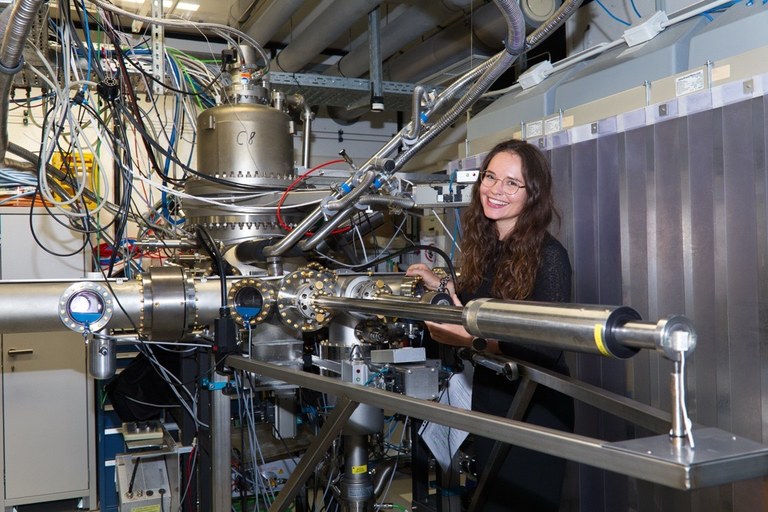
Pauline is a PhD student in the group of Dominique Bougeard at the University of Regensburg. Her work focuses on quantum-well structures enabling two-dimensional electron and hole gases, which allow the realization of single-electron and single-hole quantum dots. In addition, she investigates hybrid systems consisting of thin superconductors epitaxially grown on semiconductors. Her daily work includes the entire process - from MBE growth and sample fabrication to magneto transport measurements.
Her academic path included a bachelor’s thesis in Jascha Repp’s group on STM development and a master’s thesis in Dieter Weiss’s group on HgTe-based topological insulators, leading to her current PhD project. In addition to her scientific work, Pauline is actively involved in the jDPG and acts as the right hand of the local conference organization team for the DPG Spring Meeting in Regensburg. Beyond academia, she shares her enthusiasm for the natural sciences in youth outreach, particularly through MINT projects such as the Regensburg Student Laboratory (RSL) and Jugend forscht.
Photo credits: Jakob Walsh
Dr. Ramona Augustin (Potsdam) - Kalenderwoche 11
Photo credits: Dr. Anne Klitsch
M.Sc. Sarah Bartha (Immenstaad) - Kalenderwoche 10
Photo credits: European Space Agency
February
Dr. Laura Stevens (Freiburg) - Kalenderwoche 9
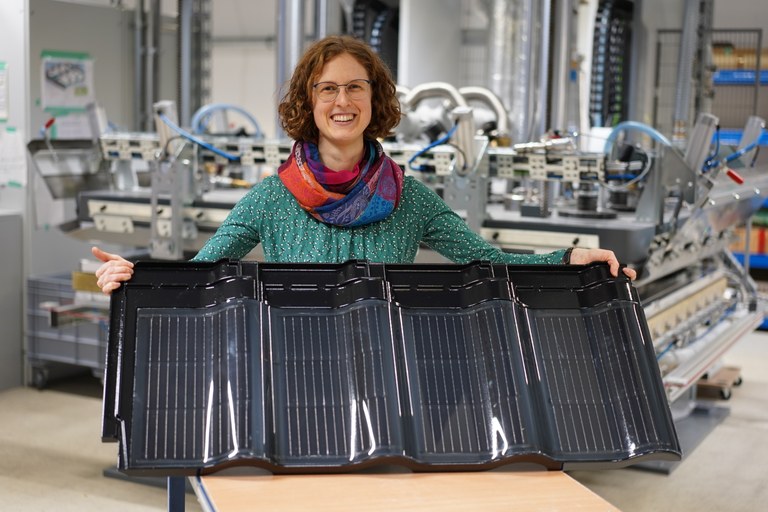
Photo credits: Jacob Forster
M.Sc. Leonie Hermann (Bern) - Kalenderwoche 8
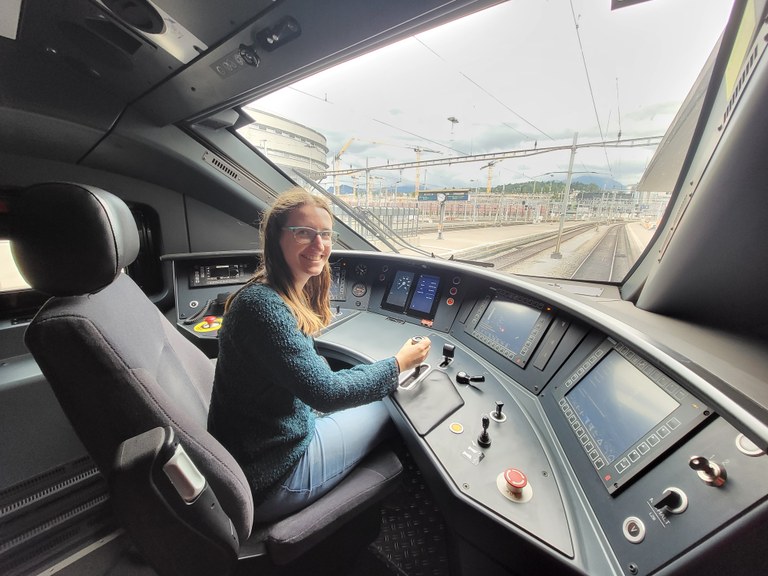
Applying her knowledge of collisions, she transitioned from fundamental research to a role as a systems engineer at a Swiss railway company. There, she now ensures that trains do not collide at all.
She analyzes and investigates the functions of train control systems and optimizes them to increase network capacity. To this end, she designs an advanced simulation tool to model driving times and headway in railway networks, allowing key parameters of train control systems – such as braking curves – to be adjusted in order to evaluate their impact on capacity. To validate her results, she contributes to field tests that reveal how train dynamics behave in real-world conditions depending on the chosen train control system parameters.
Photo credits: Privat
M.Sc. Maria Steinberger, MHBA (Munich) - Kalenderwoche 7
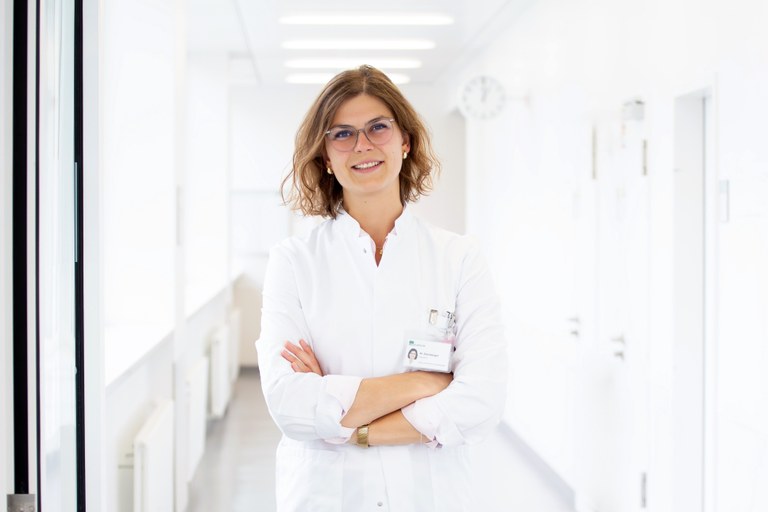
Photo credits: Eva Greta Schenkhut
Dr. Sarah Aufmkolk (Heidelberg) - Kalenderwoche 6
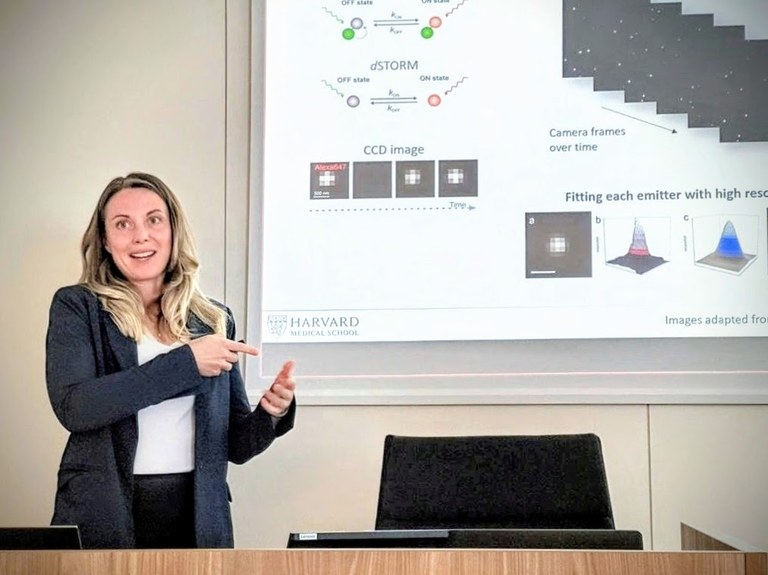
Sarah is an imaging scientist specializing in advanced fluorescence microscopy, with a background in optics and biophysics.
Her interdisciplinary career spans imaging applications in neuroscience, explored during her postdoctoral work at McGill University and the Montreal Neurological Institute, to genome imaging in her last role at Harvard Medical School with Prof. Chao-Ting Wu. There, she spearheaded imaging efforts for the NIH-funded Center for Genome Imaging, aimed at establishing high-throughput 3D Single-Molecule Localization Microscopy (SMLM) workflows for chromatin tracing.
Sarah completed her Physics diploma and PhD at the University of Würzburg under the supervision of Prof. Markus Sauer, where she developed multicolor SMLM approaches for imaging synaptic proteins.
Overall, Sarah’s work focuses on optimizing complex microscopy workflows, standardizing data acquisition, and supporting open-science practices through community training and collaborative tool development. She is especially passionate about keeping microscopy hands-on, accessible, and robust.
Currently, she is on maternity leave and will join Germany’s vibrant microscopy landscape in spring 2026 as an Application Specialist at the EMBL Imaging Centre in Heidelberg.
Photo credits: Irene Farabella
January
B.Sc. Annegret Rößler (Brussels) - Kalenderwoche 5
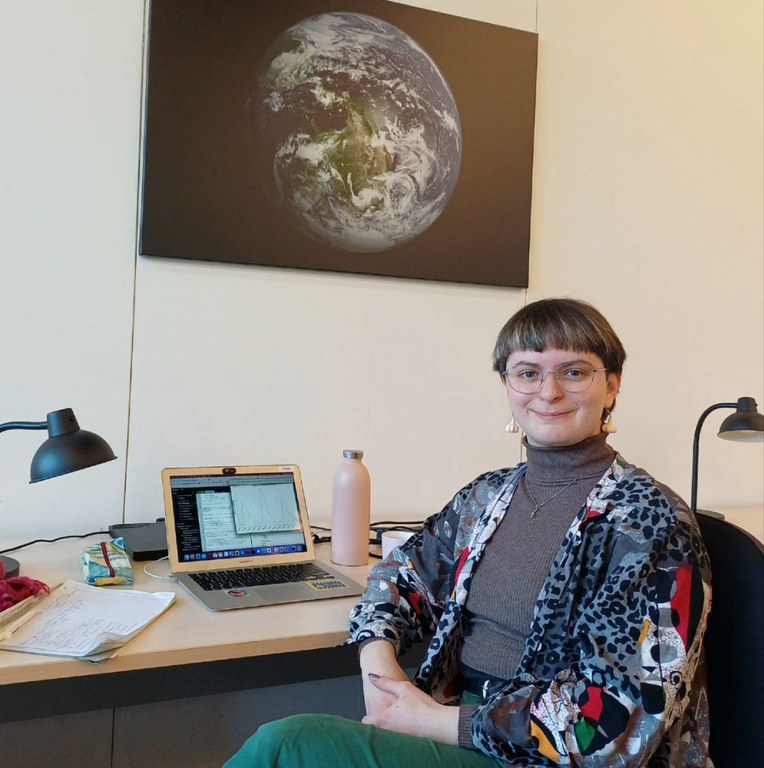
Currently, she is pursuing a Master's degree in Environmental Sciences and Management at Université Libre de Bruxelles. She utilizes her diverse background to enhance her understanding and communication of feedback mechanisms within the Earth System, focusing on the interactions between the biosphere, hydrosphere, and geosphere. Her personal focus is on biogeochemical modeling related to current and future climate change, particularly in aquatic environments. Annegret aims to leverage her expertise to contribute to climate mitigation and adaptation efforts.
She completed her Bachelor's thesis in 2024 at the Max Planck Institute for Biogeochemistry in Jena, where she evaluated regional climate models over Germany. During this period, she also served as a national board member for the vocational program of the jDPG, with her main project being the career preparation seminar "Branche: Zukunft," which connected physics and physicists to sustainable development.
In her ongoing Master's thesis at the ULB Institute of Geosciences, Annegret is deeply investigating the hydrology of the Amazon rainforest, focusing on the floodplain dynamics of the Amazon River and its implications for the carbon budget of our planet's "green lung."
Starting in May 2026, she will assume the role of Early Career Scientist (ECS) Representative for the Hydrological Science (HS) Division of the European Geosciences Union (EGU).
Photo credits: Annegret Roessler
Dr. Elena Goi (Jena) - Kalenderwoche 4
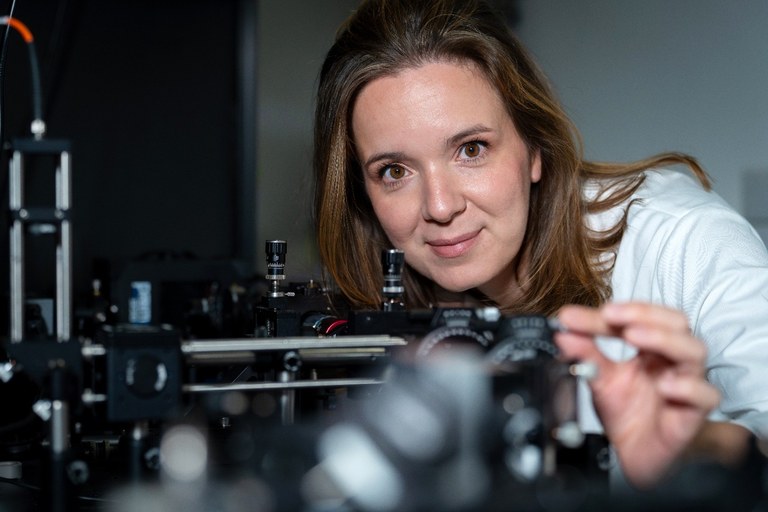
She completed her PhD at RMIT University in Melbourne, Australia, where her work focused on the development of three-dimensional photonic crystals for the study of topological photonic systems. During her time at the University of Shanghai for Science and Technology, China, where she served as an Associate Professor, Elena developed neuromorphic information processing architectures and optical neural networks implemented with nanoprinted photonics elements.
In her current role, Elena’s research is driven by interdisciplinary collaboration at the intersection of physics, photonics, and computation. She combines fundamental studies of engineered materials and their interaction with complex optical fields with the development of functional architectures for neuromorphic and optical computing, exploring how engineered photonic structures can enable efficient, high-speed, and energy-efficient information processing. Her work is motivated by advancing photonic platforms that bridge fundamental optical science with emerging technologies for next-generation computing and intelligent information processing.
Photo credits: Nicole Nerger, Friedrich-Schiller University Jena
Dr. Maria Romodina (Munich) - Kalenderwoche 3
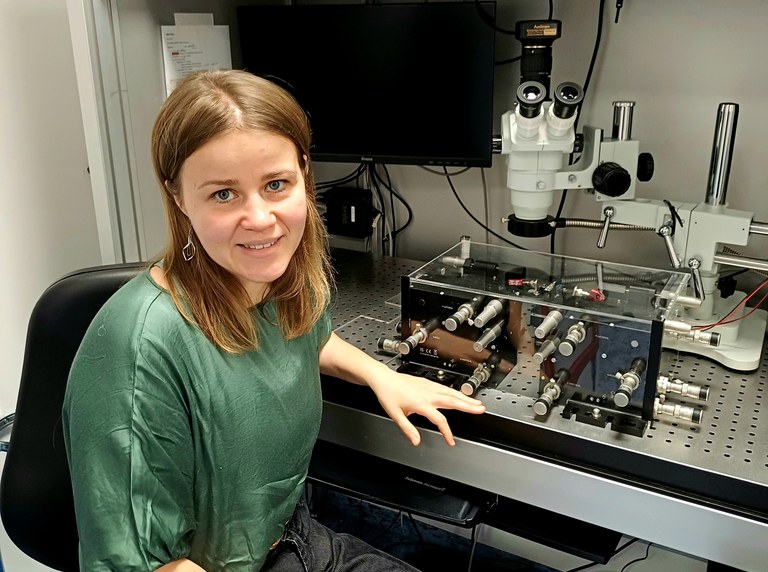
She received her PhD in Laser Physics in 2018 from Moscow State University in Russia. She then accepted a postdoctoral position at the Max Planck Institute for the Science of Light (MPL) in Erlangen, Germany. During her postdoctoral research, she studied the optical trapping of microparticles in hollow-core photonic crystal fibres, investigating the interaction of the trapped microparticles with femtosecond pulsed light. She has also worked on the development of modern optical endoscopes.
In her current role, she works on the development of cutting-edge instrumentation for high-precision metrology, including optical frequency combs and ultrastable laser systems for quantum technologies. Her experience of working with femtosecond and CW lasers, together with her knowledge of fibre optics, enables her to push the boundaries of laser quantum technologies.
Photo credits: Dr. Maria Romodina
Dr. Ricarda Opitz (Berlin) - Kalenderwoche 2
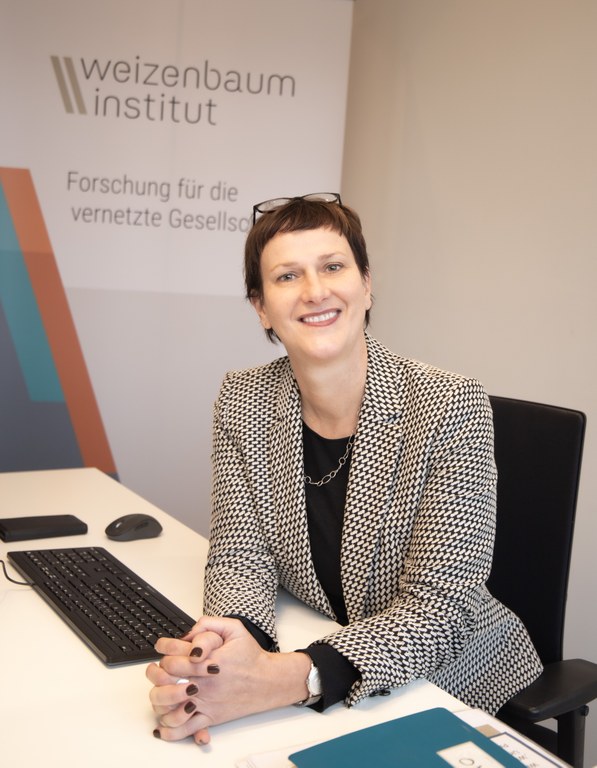
Ricarda is the Administrative Director and a member of the Managing Board of the Weizenbaum Institute, the German Research Institute for the Networked Society.
She studied physics at Otto von Guericke University Magdeburg and received her doctorate in 1998 from Humboldt University of Berlin in the field of X-ray structure analysis. She then conducted postdoctoral research at the Institute for Atomic and Molecular Physics (AMOLF) of the Foundation for Fundamental Research on Matter (FOM) in Amsterdam. After starting a family and returning to Berlin, she turned to science management. From 2006 to 2012, she was Chief Research Manager for "Structure of Matter" at the Helmholtz Association, and from 2012 to 2022, she served as Deputy Secretary General and Head of the Academic Affairs Department at the Leibniz Association, where she was responsible for strategic organisation-related issues, such as the founding of the Leibniz Leadership Academy.
In her current role, communication, leadership, and general management shape her everyday life. Ricarda is fascinated by the people she works with: The brightest scientists from a wide range of disciplines come together to conduct impressive and highly relevant research, and dedicated administrators contribute to ensuring optimal research conditions at an institute where the results reflect the highest scientific standards and the work and leadership culture is characterized by a strong value-based compass and attitude.
Photo credits: Katharina Stefes
Prof. Dr. Annabelle Bohrdt (Munich) - Kalenderwoche 1

She uses a combination of state-of-the-art numerical methods, intuitive physical models, close collaboration with quantum simulation experiments, and machine-learning techniques to extract insights from complex quantum data. Among her contributions are using “snapshots” of quantum states to identify hidden patterns (for example, in the Hubbard model) and developing interpretable neural-network architectures to classify and understand many-body quantum states. Her work bridges the gap between abstract theoretical models, highly controllable experimental platforms, and quantum materials, with the aim of revealing how complex quantum matter behaves in real systems.
Photo credits: Christoph Olesinski
Hier geht es zu den Teilnehmerinnen der Physikerin der Woche 2018, 2019, 2020, 2021, 2022, 2023, 2024 und 2025 Projekte.